

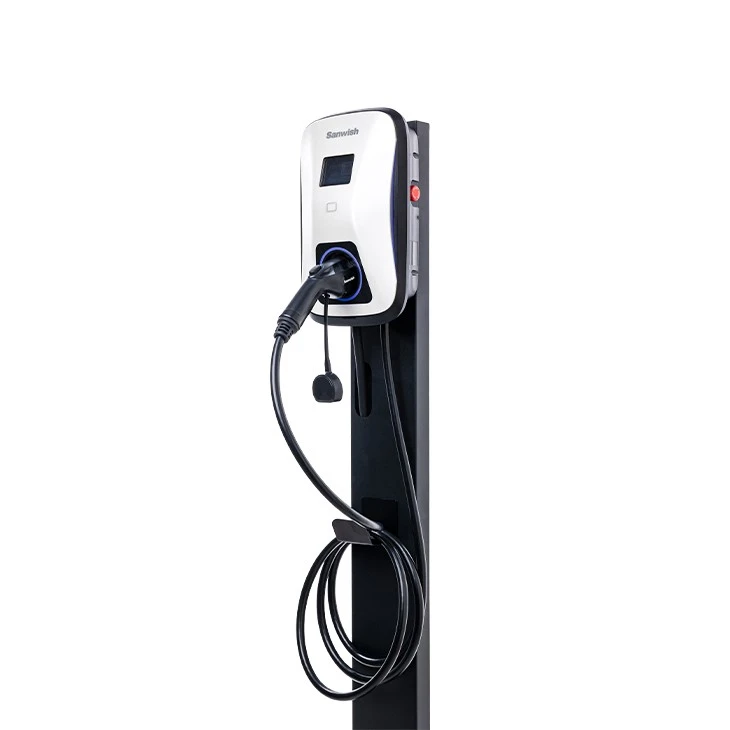
As a prominent supplier of 11kW AC EVSE (Electric Vehicle Supply Equipment), I often encounter inquiries about the feasibility of using our 11kW AC EVSE in residential complexes. This blog aims to provide a comprehensive analysis of this topic, exploring the technical, practical, and regulatory aspects involved.
Technical Feasibility
The first question that comes to mind is whether the electrical infrastructure of a residential complex can support a 11kW AC EVSE. In most modern residential complexes, the electrical system is designed to handle a certain load capacity. A 11kW AC EVSE typically operates at a voltage of 400V three - phase or 230V single - phase with an appropriate current rating.
For a 400V three - phase system, a 11kW charger would draw a current of approximately 16A (using the formula P = √3 × V × I × cosφ, where P is power, V is voltage, I is current, and cosφ is the power factor, usually around 0.9 for EV chargers). In a well - designed residential complex electrical system, this level of current draw is often manageable, especially if the complex has a dedicated electrical sub - station or a sufficient capacity main electrical panel.
On the other hand, if the charger is operating on a 230V single - phase system, the current draw would be around 48A (using the formula P = V × I × cosφ). This higher current draw may pose challenges in some older residential complexes with limited electrical capacity. However, many new residential developments are being built with upgraded electrical systems that can handle such loads.
It's also important to consider the number of EV chargers that will be installed in the complex. If multiple 11kW AC EVSE units are to be installed, the cumulative load on the electrical system needs to be carefully calculated. For example, if there are 10 chargers operating simultaneously, the total power demand would be 110kW. This requires a detailed load analysis by a qualified electrical engineer to ensure that the electrical infrastructure can handle the load without overloading or causing safety hazards.
Practical Considerations
Beyond the technical aspects, there are several practical considerations when installing 11kW AC EVSE in a residential complex. One of the main concerns is the availability of parking spaces. EV chargers need to be installed in close proximity to parking spots so that electric vehicles can be easily connected. In some residential complexes, parking spaces may be limited, and there may be competition for the spaces near the chargers.
Another practical issue is the user experience. Residents need to be educated on how to use the EV chargers properly. This includes understanding how to plug in the vehicle, how to start and stop the charging process, and how to pay for the electricity used. Our company provides detailed user manuals and can also offer on - site training to residents to ensure a smooth charging experience.
Maintenance is also an important factor. Like any electrical equipment, 11kW AC EVSE units require regular maintenance to ensure their proper functioning. This includes checking the electrical connections, inspecting the charging cables for damage, and testing the safety features. Our company offers comprehensive maintenance services to ensure that the chargers are always in good working condition.
Regulatory Requirements
When installing 11kW AC EVSE in a residential complex, it's crucial to comply with all relevant regulatory requirements. These requirements may vary depending on the location of the complex. In many regions, there are building codes and electrical safety standards that need to be followed. For example, the chargers need to be installed in accordance with the local electrical installation regulations, which may specify the type of wiring, grounding requirements, and protection against electrical faults.
There may also be regulations regarding the installation of charging stations in public or semi - public areas such as residential complexes. Some regions require permits to be obtained before installing EV chargers. Our company has extensive experience in dealing with these regulatory requirements and can assist residential complex management in obtaining the necessary permits and ensuring compliance with all relevant regulations.
Comparison with Other Charger Options
While 11kW AC EVSE is a popular choice for residential complexes, it's worth comparing it with other charger options. For example, our company also offers 22kW Ac Fast Charger Ev. A 22kW charger can charge an electric vehicle faster than a 11kW charger, but it also requires a higher electrical load. This may not be suitable for all residential complexes, especially those with limited electrical capacity.
On the other hand, our 7.2 KW AC Charger is a more low - power option. It draws less current and is more suitable for residential complexes with older electrical systems or limited electrical capacity. However, the charging time will be longer compared to a 11kW charger.
Conclusion
In conclusion, a 11kW AC EVSE can be used in a residential complex, but it requires careful consideration of the technical, practical, and regulatory aspects. With proper planning, load analysis, and compliance with regulations, a 11kW AC EVSE can provide a convenient and efficient charging solution for residents of the complex.
If you are a residential complex manager or developer interested in installing 11kW AC EVSE or other Ac Fast Charger For Ev in your complex, we would be delighted to discuss your specific requirements. Our team of experts can provide you with detailed technical advice, assist with the installation process, and offer ongoing maintenance services. Contact us today to start the conversation about bringing reliable and efficient EV charging solutions to your residential complex.

References
- Electrical Installation Regulations Handbook, National Electrical Code (NEC)
- Standards for Electric Vehicle Supply Equipment, International Electrotechnical Commission (IEC)
- Building Codes for Residential Complexes, Local Building Department Publications