

AC EV Charger
An AC (Alternating Current) EV (Electric Vehicle) charger is a device that provides electric energy to recharge electric vehicles using AC from the power grid. The power from an AC charger is converted to DC (Direct Current) by the vehicle’s onboard charger to charge the battery. An AC EV charger consists of three key components: The connector or charging plug: This connects the charger to the vehicle. The power unit regulates the flow of electricity from the power source to the vehicle. The team pulls AC power from the grid, and the vehicle’s onboard charger converts it to DC power. The user interface can be a screen or a simple LED indicator showing the charging status.
-
![22kW AC EV Charger]() 22kW AC EV ChargerSanwish 22kW AC EV charger is a newly developed smart EV charger for widely use. This EV charger is suitable for most EV models. It has the advantages of safety and reliability, solid materials,...read more
22kW AC EV ChargerSanwish 22kW AC EV charger is a newly developed smart EV charger for widely use. This EV charger is suitable for most EV models. It has the advantages of safety and reliability, solid materials,...read more -
![7kW AC Charger]() 7kW AC ChargerSanwish 7kW AC charger is one smart EV charger product for widely use. This EV charger is suitable for most EV models. It has the advantages of safety and reliability, flexible configuration, and...read more
7kW AC ChargerSanwish 7kW AC charger is one smart EV charger product for widely use. This EV charger is suitable for most EV models. It has the advantages of safety and reliability, flexible configuration, and...read more -
![AC Home Charger]() AC Home ChargerSanwish AC home charger is splash, water and dust resistant, and have been tested under strictly controlled laboratory conditions to achieve IP54 protection level in accordance with IEC standard.read more
AC Home ChargerSanwish AC home charger is splash, water and dust resistant, and have been tested under strictly controlled laboratory conditions to achieve IP54 protection level in accordance with IEC standard.read more -
![Home Ac Charger For Ev]() Home Ac Charger For EvIndeed, having a residential EV charger is very convenient for supplying your electric car battery with everyday power needs.read more
Home Ac Charger For EvIndeed, having a residential EV charger is very convenient for supplying your electric car battery with everyday power needs.read more -
![Ac Level 2 Charging Station]() Ac Level 2 Charging StationSanwish is able to customize all types of EV charger connectors to fit customers’ unique needs.read more
Ac Level 2 Charging StationSanwish is able to customize all types of EV charger connectors to fit customers’ unique needs.read more -
![22kW Ac Fast Charger Ev]() 22kW Ac Fast Charger EvSanwish 22kW AC fast charger EV is produced using premium materials, which are for the highest standards of safety and quality.read more
22kW Ac Fast Charger EvSanwish 22kW AC fast charger EV is produced using premium materials, which are for the highest standards of safety and quality.read more -
![Ac Fast Charger For Ev]() Ac Fast Charger For EvCustomer-friendly benefits of Sanwish AC fast charger for EV Sanwish AC fast charger for EV is designed to become an EV driver’s favorite charger product with dependable and customer-friendly...read more
Ac Fast Charger For EvCustomer-friendly benefits of Sanwish AC fast charger for EV Sanwish AC fast charger for EV is designed to become an EV driver’s favorite charger product with dependable and customer-friendly...read more -
![11kW AC Type 2 EV Charger]() 11kW AC Type 2 EV ChargerSanwish 11kW AC type 2 EV charger is an intelligent EV Charger with small size and fashion design. Easy control via Bluetooth, WIFI or 4G makes Sanwish product always the most reliable and safe...read more
11kW AC Type 2 EV ChargerSanwish 11kW AC type 2 EV charger is an intelligent EV Charger with small size and fashion design. Easy control via Bluetooth, WIFI or 4G makes Sanwish product always the most reliable and safe...read more -
![AC EV Charging Station]() AC EV Charging StationSanwish AC EV charging station is an intelligent EV Charger with small size, fashion design, and industry leading inner design for top efficiency. Sanwish AC EV charging station is the most...read more
AC EV Charging StationSanwish AC EV charging station is an intelligent EV Charger with small size, fashion design, and industry leading inner design for top efficiency. Sanwish AC EV charging station is the most...read more -
![22kW AC Charger]() 22kW AC ChargerSanwish 22kW AC charger is a wall-mounted or floor-mounted smart charger and suitable for home using. It is easy to install, stable in performance, and has a complete protection mechanism.read more
22kW AC ChargerSanwish 22kW AC charger is a wall-mounted or floor-mounted smart charger and suitable for home using. It is easy to install, stable in performance, and has a complete protection mechanism.read more -
![11kW AC Charger]() 11kW AC ChargerSanwish 11kW AC charger is wall-mounted/floor-mounted smart charger and suitable for home using. It is easy to install, stable in performance, and has a complete protection mechanism.read more
11kW AC ChargerSanwish 11kW AC charger is wall-mounted/floor-mounted smart charger and suitable for home using. It is easy to install, stable in performance, and has a complete protection mechanism.read more -
![7.2 KW AC Charger]() 7.2 KW AC ChargerSanwish 7.2kW AC charger is a full-featured home EV charger designed to provide safe and reliable charging for electric vehicles. Sanwish EV charger delivers a power of 7.2kW and comes with...read more
7.2 KW AC ChargerSanwish 7.2kW AC charger is a full-featured home EV charger designed to provide safe and reliable charging for electric vehicles. Sanwish EV charger delivers a power of 7.2kW and comes with...read more


Advantages of AC EV Charger
Cost
AC chargers are typically less expensive than DC fast chargers, both in terms of the unit and installation costs. This makes them a more economical option for many EV owners.
Battery health
Slow, steady charging using AC power is generally better for the long-term health of EV batteries. Rapid DC charging can generate heat and stress the battery, potentially reducing its lifespan.
Grid stability
Slow charging is also easier on the electrical grid. If everyone with an EV were to use fast DC chargers, it could significantly strain the grid, especially during peak usage times.
Wide availability of charging stations
Many public and private parking spaces have Level 2 AC chargers. These are easy to use and, while not as fast as DC fast chargers, they provide ample charging for people parking for a few hours or more.
Why Choose Us
Our factory
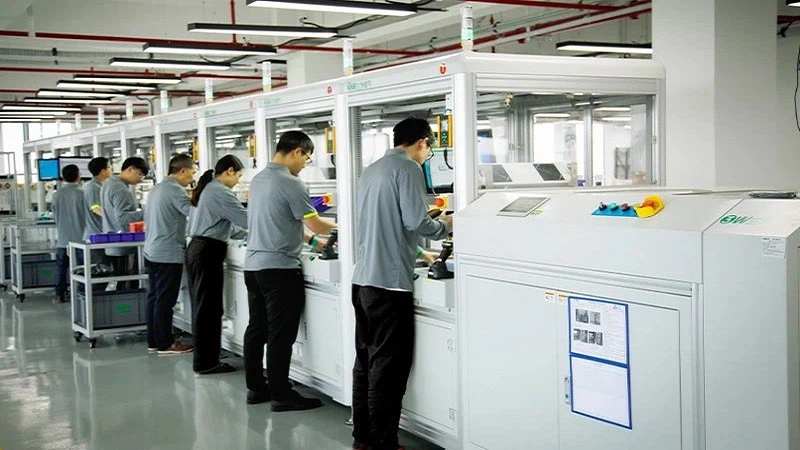
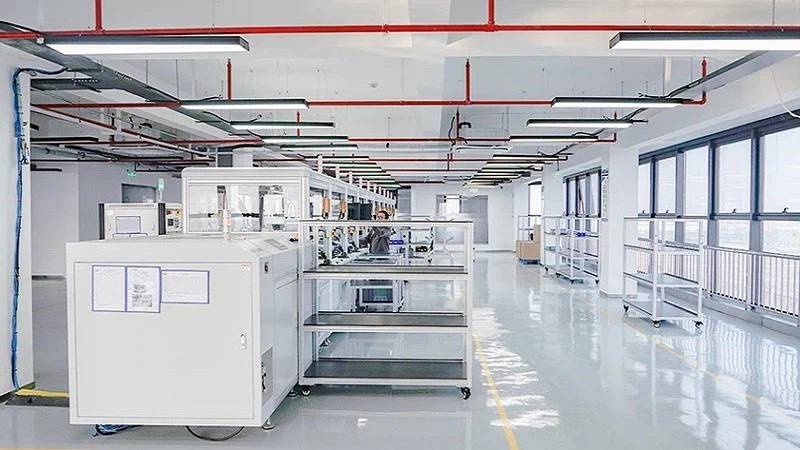
Sanwish factory is located in Hangzhou city with 10000m2 floor area and 230 high skilled employees. It is equipped with advanced production lines with daily production capacity of 500 units EV chargers and related accessories. Sanwish factory obtains ERP and MES production management systems, and can track the entire life cycle of each product sold.
Our certificate
Our products are certified with ISO9001, TUV, and CE certificates. These certifications validate that our products meet international quality standards and safety regulations, providing reliable assurance to our customers.
Production equipment
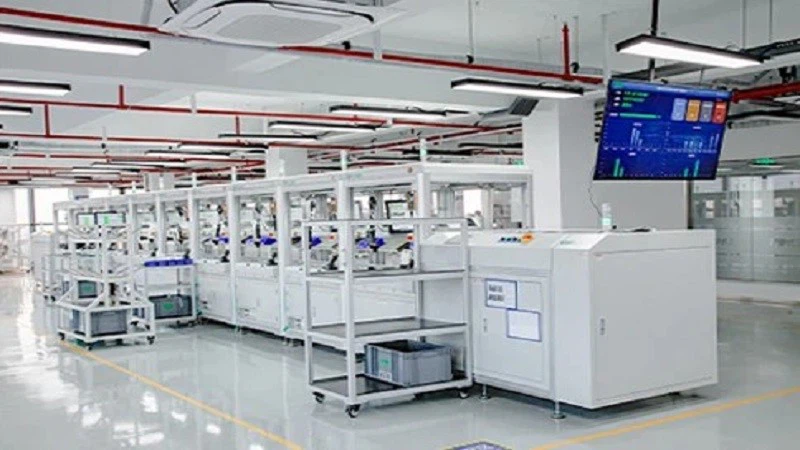
Station AC EV chargers production line, equipped with MES system. Each workstation has a code scanner and SOP display screen. SOP display screen shows production status in real time. Each workstation is equipped with a code scanner, and the MES system records the production information of each product.
Our service
1 to 1 customized professional communication, as specific as possible. It offer tailor-made solutions for customers according to customers' specific requirement. Offer competitive prices for the available products. 2 years warranty. 100% follow up within warranty period accessories support within warranty period. Replace new products for quality problems within warranty period.
Battery management system(BMS)
Battery management system evaluates and ensures the safe working of a rechargeable battery. The main functions of a BMS include safety monitoring, performance optimization, health monitoring and diagnosis and communication. BMS monitors the operating temperature continuously. If overheating is sensed by the BMS the output power is automatically decreased and the vehicle enters safe operation mode. BMS controls the supply of the current to the battery to avoid overcharging. It also monitors the individual packs of the cell. The State of Charge is calculated by the BMS. It refers to the available energy of the battery and determines the mileage of the vehicle. BMS communicates with the on-board charger and efficiently controls the charging of the battery pack.
On-board charger
To discuss the working of AC EV charging, we need to know the function of on-board charger. The on-board charger controls the current and voltage parameters of battery charging. This factor determines the life-span of a battery. The on-board charger offers two types of charging, constant current and constant voltage charging. Constant current charging has high charging speed and efficiency but it may lead to over-charging. The disadvantage of constant voltage charging is that it may lead to over-heating at the beginning. Hence, initially, the battery is charged at a constant current. After that, when the battery reaches a certain limit, constant current charging takes place. This is a key feature of an on-board charger. An EMI filter should be placed at the input of the PFC boost converter to reduce EMI and harmonic distortion. The PFC stage (Power factor controller or Power factor correction) converts alternating (AC) current to direct current in the first phase. This portion of the charger determines whether it can use one, two, or all three alternating current phases. The second phase receives the 700V output voltage. The LLC converter is the second phase. The input voltage is 700V, and the output voltage is the voltage required by the battery at any given charging time. The resulting DC signal is sliced into a switched square wave, which is then used to drive a transformer to generate the appropriate DC voltage.
Function and Composition of AC EV Chargers
AC EV chargers are the medium between electric vehicles and the power grid. They obtain AC power from the power grid and convert it into DC power for vehicle battery charging. AC EV chargers primarily consist of the input power connection, power conversion unit, user interface, control unit, and protection module.
The charger draws power from the grid via its input power connection. Within the power conversion unit, essential components, including an AC-to-DC converter, work to transform high-voltage AC into low-voltage DC power. The user interface is equipped with a display and control buttons that allow EV owners to operate the AC EV charger. It provides real-time charging status along with historical usage data.
The control unit manages and monitors the charging process to ensure the correct flow of electricity. Moreover, the protection module provides temperature monitoring and overcurrent protection to ensure charging safety. Premium-grade EV connect charging stations also boast modular design with separate enclosures to facilitate hassle-free maintenance and upgrading.
The Key Components of an AC EV Charger
Input power supply
The input power supply provides AC power from the grid to the charger.
AC-DC converter
The AC-DC converter converts the AC power to DC power that is used to charge the electric vehicle.
Control board
The control board manages the charging process, including monitoring the battery’s state of charge, regulating the charging current and voltage, and ensuring safety features are in place.
Display
The display provides information to the user, including charging status, charge time remaining, and other data.
Connector
The connector is the physical interface between the charger and the electric vehicle. It provides power and data transfer between the two devices. The connector type for AC EV chargers varies depending on the region and the standard used. The Type 2 connector is the most common for AC charging.

What Are the Different Levels of AC EV Charger
Level 1 charging
Level 1 Charging is the simplest form of EV charging. A standard 120-volt AC household outlet can take 8 to 20 hours or more to fully charge an electric vehicle. They typically provide about 2 to 5 miles of range per hour of charging, making them best suited for plug-in hybrid electric vehicles (PHEVs) or overnight charging for battery electric vehicles (BEVs) with smaller batteries.
Level 2 charging
Level 2 chargers require a 240-volt AC circuit, similar to what extensive household appliances use (like clothes dryers or ovens). Level 2 chargers are significantly faster than Level 1. On average, a fully depleted battery can be fully charged in 4-6 hours with a Level 2 charger, although some high-capacity batteries may take longer. And it provides about 10 to 60 miles of range per hour of charging. This makes them suitable for all-electric vehicles and charging at public charging stations. Please note that the charge rates can vary widely depending on the car’s acceptance rate and the amperage of the Level 2 EVSE (Electric Vehicle Supply Equipment), among other factors. In other parts of the world, where residential voltages are typically higher, the distinction between Level 1 and Level 2 charging may differ.
How to Choose the Right AC EV Charger
Compatibility
The charge controllers should be able to cater to latest charging standards to be able to charge the EV’s. The controllers should be able to support various protocols to support output options like Type 1, Type 2, IEC 60309 outputs.
Charging capacity
The charging performance is also an important consideration. Usually, different AC charger controllers have different charging speeds; therefore, it is important to choose the one delivering the precise charging capacity required by the EVs in your region meeting the standard regulations.
Connector type
EVs use different types of connectors for charging, so choose an AC charger controller that is compatible with the EVs at your charging stations.
Communication
The controller has to support communications with cloud servers with various options like Wifi, Ethernet, GSM based on the on field use cases. The controllers should also support communication over industry standard protocols like OCPP.
Safety features
Look for an AC charger controller with built-in features such as overcharge protection, over-current protection, and short-circuit protection. A properly designed and implemented AC charge controller helps ensure the safety of the charging process for both; the vehicle and the charging station.
Brand reputation
Choose a reputable brand while selecting an AC charger controller. A branded controller comes with assurance, high-quality, reliability, and backed by a warranty.
Future-proofing
With technology advancements, your average AC charge controller might limit its compatibility with the next-gen charging stations. Therefore, selecting a scalable and technologically advanced AC charge controller, you can future-proof your EV charging setup and avoid the need for expensive upgrades down the line.
Price
AC charger controllers vary in price, so opt for one that fits within your budget. Yet, it’s also important to consider the long-term benefits of a high-quality AC charger controller, such as extended charger life and faster charging times.
Installation
Consider the installation process and whether you have the necessary electrical capacity and infrastructure to support the AC charger controller.
Understand the basics
Familiarize yourself with the basics of EV charging. As I mentioned in earlier responses, there are different levels of charging. Most home charging occurs at Level 1 (standard 120V outlet) or Level 2 (240V outlet).
Choose the right charger for your needs
If you plan on charging mainly at home. Your daily driving is within the range provided by a night’s charge at Level 1, and you may not need anything more than the charging cord that comes with your EV. If you drive long distances daily, invest in a Level 2 charger for faster charging.
Check your vehicle compatibility
Not all EVs and charging stations use the same type of plug, although many use the J1772 standard. Make sure that the charger you select is compatible with your vehicle.
Home installation
For Level 2 charging at home, you may need to hire a professional electrician to install a 240V outlet unless you already have one (like those used for large appliances). Then, you can plug in a portable Level 2 charger or install a permanent one. Always follow local codes and regulations.
Public charging
Familiarize yourself with the public charging options available in your area. There are various networks; some may require membership or specific payment methods.
Mobile apps
Many EV manufacturers and charging network providers have mobile apps that can guide you to the nearest charging station, allow you to pay for charging, and sometimes even monitor your vehicle’s charging status.
Understand your electricity bill
Depending on where you live, your utility may offer special rates for EV owners or lower rates for off-peak charging. Understanding your electricity rates can help you save money.
Maintenance
Generally, EV charging stations require minimal maintenance but always follow the manufacturer’s instructions. Check occasionally for any wear and tear. Lastly, always follow the vehicle manufacturer’s guidance regarding charging procedures to maintain the health and longevity of your EV’s battery.
Our Factory
Sanwish is a professional EV charger manufacturer founded by Zhejiang LHD Ocean Tidal Power, which owns the world's largest tidal power station. By the huge support from parent group, Sanwish establishes own strong R & D team, and focuses on providing various types EV charger products for customers. Sanwish philosophy: Quality first, providing customers with high quality products that can withstand long-term testing. We are building a reputed brand and we cherish cooperation with all clients. Customer satisfaction is always our top concern. Sanwish factory is located in Hangzhou city with 10000m2 floor area and 230 high skilled employees. It is equipped with advanced production lines with daily production capacity of 500 units EV chargers and related accessories. Sanwish factory obtains ERP and MES production management systems, and can track the entire life cycle of each product sold. To guarantee product quality, it is also equipped with various testing equipment. Sanwish products have been exported to more than 20 countries in Europe, the Middle East, Southeast Asia, etc. Our products are certified with ISO9001, TUV, and CE certificates. These certifications validate that our products meet international quality standards and safety regulations, providing reliable assurance to our customers.
Certificate


FAQ
As one of the most professional ac ev charger manufacturers and suppliers in China, we're featured by quality products and competitive price. Please rest assured to buy high-grade ac ev charger from our factory.
ac ev charger college campus charging, ac ev charging device, ac ev charger electric vehicle charging renewable energy charging possibilities