

EV Charger Tester
EV charging point testers are specialized devices used to verify the safety and functionality of electric vehicle (EV) charging stations. These testers are essential tools for electricians, maintenance technicians, and EV charging station operators to ensure the reliable and safe operation of charging infrastructure. EV testers measure the AC and DC charging ability of a charging station by mimicking an electric vehicle (EV). This portable device can test for all AC levels along with any DC charging purposes.The EV charging test equipment not only analyzes the station's charging ability and accuracy, but simulates any faults that may occur when connected to an EV. Common charging faults like CP signal errors and protective conductor faults may be found within seconds through the device.
Advantages of EV Charger Tester
Unmatched versatility
Unparalleled versatility, allowing engineers to seamlessly transition between different charging standards. Its comprehensive compatibility ensures compatibility with a wide range of ev chargers, making it the go-to choice for testing in any setting.
Portability redefined
Say goodbye to bulky testing equipment. A compact and lightweight design, enabling engineers to take their testing capabilities anywhere. Whether it’ s on-site testing or field diagnostics, this device ensures convenience without compromising accuracy.
Approved efficiency
Designed with engineers in mind, prioritizes efficiency and usability. Here are some key features that engineers appreciate.
Compact and portable
Enjoy the freedom to conduct tests anywhere with the sleek and lightweight design. No need for complex setups or additional calibration—it is ready to go whenever you are.
-
![EV Car Charger Tester]() EV Car Charger TesterSanwish EV car charger tester can be used for debugging and functional verification of European standard DC EV charger product. It is developed based on the standard protocols ISO 15118 and DIN...read more
EV Car Charger TesterSanwish EV car charger tester can be used for debugging and functional verification of European standard DC EV charger product. It is developed based on the standard protocols ISO 15118 and DIN...read more -
![EVSE Testing Equipment]() EVSE Testing EquipmentSanwish EVSE testing equipment is mainly used for online debugging, offline testing, aging test and functional verification of AC EV charger products. The test system truly simulates the charging...read more
EVSE Testing EquipmentSanwish EVSE testing equipment is mainly used for online debugging, offline testing, aging test and functional verification of AC EV charger products. The test system truly simulates the charging...read more -
![Best EV Charger Tester]() Best EV Charger TesterSanwish best EV charger tester complies with the standard protocols ISO 15118 and DIN SPEC 70121. It is suitable for DC EV charger testing. The 10-inch touch screen operation interface is...read more
Best EV Charger TesterSanwish best EV charger tester complies with the standard protocols ISO 15118 and DIN SPEC 70121. It is suitable for DC EV charger testing. The 10-inch touch screen operation interface is...read more -
![DC EV Charger Tester]() DC EV Charger TesterSanwish DC EV charger tester complies with the standard protocols ISO 15118 and DIN SPEC 70121. It is suitable for DC EV charger testing. The 10-inch touch screen operation interface is convenient...read more
DC EV Charger TesterSanwish DC EV charger tester complies with the standard protocols ISO 15118 and DIN SPEC 70121. It is suitable for DC EV charger testing. The 10-inch touch screen operation interface is convenient...read more -
![EV Charging Station Tester]() EV Charging Station TesterSanwish EV charging station tester is mainly used for online debugging, offline testing, aging testing, and functional verification of AC EV charger products. This avoids the problems caused by...read more
EV Charging Station TesterSanwish EV charging station tester is mainly used for online debugging, offline testing, aging testing, and functional verification of AC EV charger products. This avoids the problems caused by...read more


Why Choose Us
Our factory
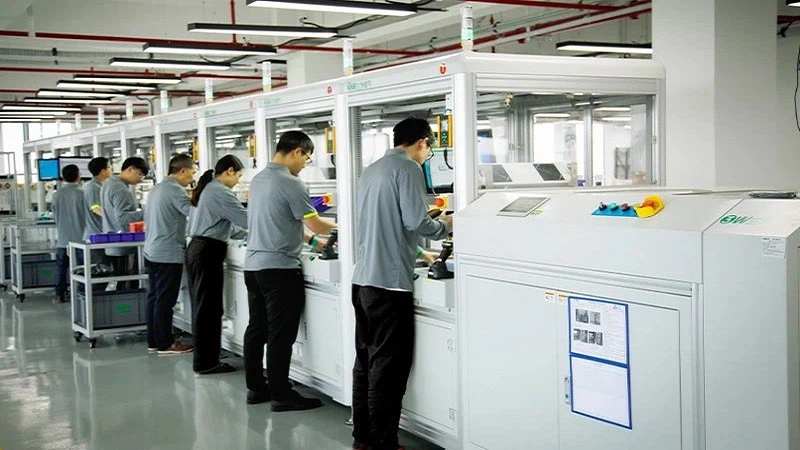
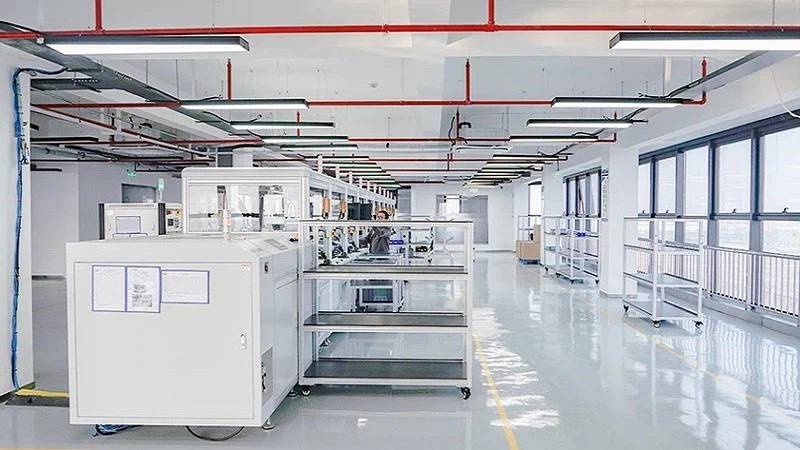
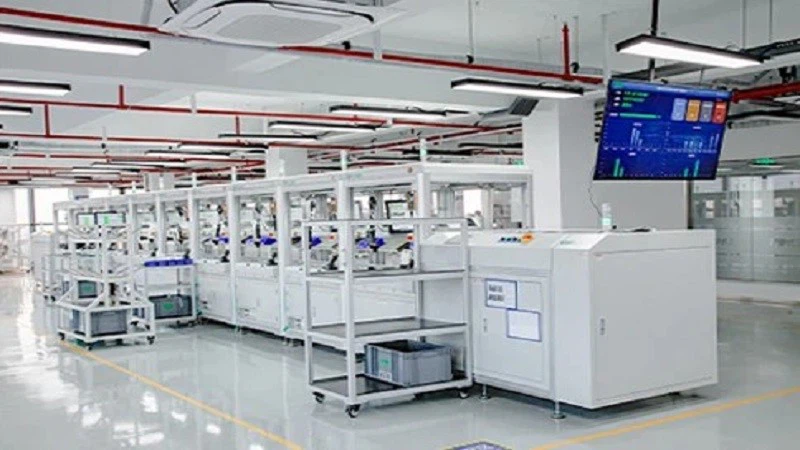
Sanwish factory is located in Hangzhou city with 10000m2 floor area and 230 high skilled employees. It is equipped with advanced production lines with daily production capacity of 500 units EV chargers and related accessories. Sanwish factory obtains ERP and MES production management systems, and can track the entire life cycle of each product sold.
Our certificate
Our products are certified with ISO9001, TUV, and CE certificates. These certifications validate that our products meet international quality standards and safety regulations, providing reliable assurance to our customers.
Production equipment
Station AC EV chargers production line, equipped with MES system. Each workstation has a code scanner and SOP display screen. SOP display screen shows production status in real time. Each workstation is equipped with a code scanner, and the MES system records the production information of each product.
Our service
1 to 1 customized professional communication, as specific as possible. It offer tailor-made solutions for customers according to customers' specific requirement. Offer competitive prices for the available products. 2 years warranty. 100% follow up within warranty period accessories support within warranty period. Replace new products for quality problems within warranty period.
On-site Testing of EV Charger Tester
Protective earth
To verify connection to protective earth.
Protective conductor resistance
This test verifies that exposed metalwork on the charger is effectively connected to the ground pin on the charger’ s socket or plug.
Touch voltage test
This test ensures that an inadequate ground will not raise the output voltage to a hazardous level during testing.
Trip time
This test checks that ground fault circuit interrupters (gfcis) function in the proper amount of time to protect equipment damage and personnel from injury.
Nuisance tripping test
This test detects extraneous currents, such as the capacitive charging of long extension cables, that can be sources of nuisance tripping.
Proximity circuit test
This ensures that the proximity circuit is functioning correctly. A proximity circuit prevents the vehicle from moving during charging, an obvious safety requirement.
Control pilot check
This test verifies the integrity of the communication between the charger and the vehicle.
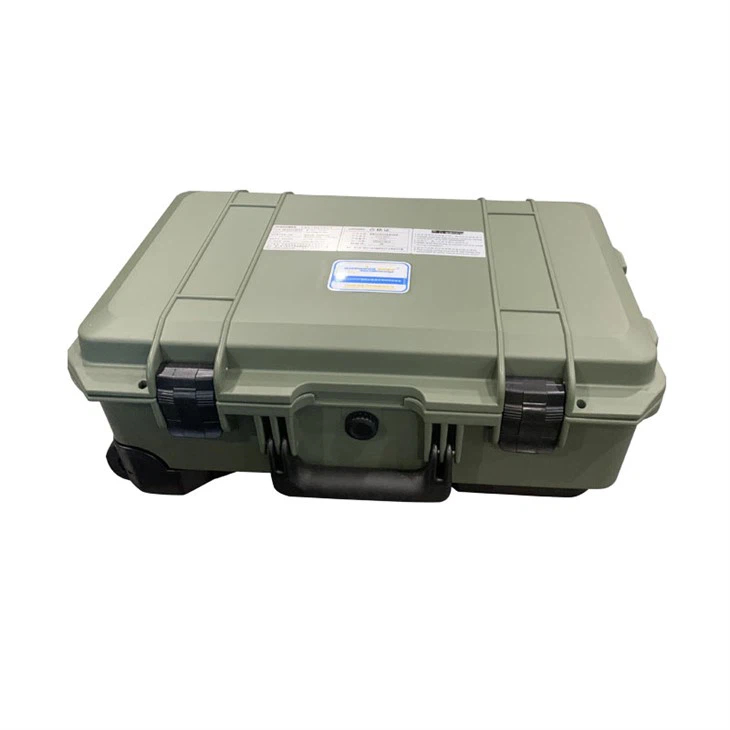
Testing of AC Chargers and DC EV Charger Tester
The charging equipment is the core part of the entire charging station electrical system, generally divided into DC charging devices and AC charging devices (piles). DC charging devices, that is, non-vehicle-mounted chargers, achieve the function of rapid battery charging. AC chargers mainly provide the function of slow charging for vehicles, outputting AC power and connecting to the vehicle-mounted charger. The charging monitoring system is composed of one or more workstations or servers, which can include monitoring workstations, data servers, etc. These computers are connected through a network. The monitoring workstation provides a human-machine interaction interface for charging monitoring, realizing the monitoring and data collection, querying, etc., of the charger; the data server stores the original data and statistical analysis data of the entire charging system, providing data services and other application services.
Principle of AC Chargers The electrical system of the AC charger, consists of a main circuit including an input circuit breaker, an AC intelligent power meter, an AC control contactor, and a charging interface connector; and a secondary circuit including a control relay, an emergency stop button, operation status indicator lights, an intelligent controller for the charging pile, and human-machine interaction devices (display, input, swipe card). Principle of DC Fast Charging The electrical system of the DC Fast Charging takes in three-phase grid AC power, which is rectified into DC power through a three-phase bridge uncontrolled rectifying circuit, filtered, then provided to a high-frequency DC-DC power converter. The power converter, after a direct-to-direct conversion, outputs the required DC power, which is filtered again to charge the power storage battery of the pure electric vehicle.
The new type of DC Fast Charging adopts a rapid charging method, differing from the continuous current charging and pulse current charging methods used by traditional chargers, adopting an intelligent variable pulse charging method, as shown in the following figure. This includes charging pulses T1, intermittent pulses T2, and discharge pulses T3. By intermittently stopping charging, the oxygen and hydrogen gases produced by the chemical reaction in the storage battery have time to recombine and be absorbed, allowing the next round of constant current charging to proceed more smoothly, enabling the storage battery to absorb more electricity.

Power supply requirements
The charging station should use a 10(20)KV voltage level for power supply; AC chargers should use 380V or 220V voltage levels for power supply; DC Fast Charging should use 380V voltage level for power supply.
Power quality requirements
The power supply voltage deviation should comply with the standards, the voltage deviation for 10(20)KV and below three-phase power supply should not exceed ±7% of the nominal voltage. The voltage deviation for 220V single-phase power supply should not exceed +7% / -10% of the nominal voltage; the frequency deviation should not exceed ±0.2Hz; The harmonic voltage limit of the public power grid requires the total harmonic distortion rate of 10(20)KV three-phase voltage to be less than 5%, and the 380V three-phase voltage total harmonic distortion rate to be less than 4%; Ensure that the power factor on the 10(20)KV side of the transformer during maximum load operation is not less than 0.95.
Electrical measurement requirements
The parts that need to be measured and metered for energy efficiency include: transformer high and low voltage side incoming lines, charging machine circuit, charging pile power supply circuit.
An EV charger tester instrument effectively simulates an electric vehicle and presents the user with the conditions that the charging station would be faced with. So these conditions would include a vehicle that is plugged into the charging station and is waiting for charge, a vehicle plugged into the charging station and is not waiting for charge, and a vehicle plugged into the charging station, waiting for charge and with an electric fault condition.
In order to test the safety, reliability and performance of the EV charging station, the EV charger tester will carry out. Some units include an auto sequence functionality which guides the user through the testing sequence and explains where to plug-in the test leads and what dial positions you need on the unit for each part of the sequence. For each test this guided help screen will make the process quick and simple for the user.
Precautions for Using EV Charger Tester
The AC charger tester is easy to use. Just few steps are needed to validate the EV Charger is fully operational. Plug in the charger and set switch ‘EV Ready’ to on. Activate the EV charger by app, mobile or RFID card which ever is applicable. Set switch ‘Charge’ to ‘On’: For a 1 phase EV charger LED indicator L1 will go on. For a 3 phase charger all 3 mains LEDS (L1, L2, L3) should turn on and one of the phase indictors will indicate the phase direction of the mains. Optionally, a BNC connector offers the possibility to measure the Control Pilot (CP) signal. An Oscilloscoop or multimeter is neccesary.
The EV charger tester comes with a outlet. When connected with a load, it can be used to validate the energy meter (Kwh-meter) (if present in the Charger).The outlet may also be used to connect elektric tools or chargers up to a maximum of 3700 watt (fused). The EV Simulator has a special type 2 plug which allows mating with sockets as with Type 2 female plugs. While this might sound obvious, a ‘normal’ male plug will not fit a female plug. It only fits sockets. This is done to prevent that charge cables are uses as extension cords.
How Do You Properly Maintain an EV Charger Tester
Inspect and clean the EV charger tester
EV charger tester cleaning includes cleaning filters and the surrounding area of any debris or dirt accumulated.
Perform regular safety checks
Visual safety checks include checking the connections, inspecting the cables, and ensuring that all safety features function properly.
Check the EV charger tester’ s power supply
A thorough power supply inspection verifies the EV charger tester; s voltage, current, and power ratings.
Check the EV charger tester’ s wiring
Inspecting the EV charger tester’s wiring for any damage or corrosion ensures that everything is securely fastened and running efficiently.
Check the EV charger tester’ s charging ports
This includes ensuring the ports are clean, free of debris, excessive wear, and broken components.
Test the EV charger tester
This includes testing the station’s charging capabilities and ensuring it functions properly. Regular maintenance of EV charger testers is essential to ensure their safety and reliability.
Our Factory
Sanwish is a professional EV charger manufacturer founded by Zhejiang LHD Ocean Tidal Power, which owns the world's largest tidal power station. By the huge support from parent group, Sanwish establishes own strong R & D team, and focuses on providing various types EV charger products for customers. Sanwish philosophy: Quality first, providing customers with high quality products that can withstand long-term testing. We are building a reputed brand and we cherish cooperation with all clients. Customer satisfaction is always our top concern. Sanwish factory is located in Hangzhou city with 10000m2 floor area and 230 high skilled employees. It is equipped with advanced production lines with daily production capacity of 500 units EV chargers and related accessories. Sanwish factory obtains ERP and MES production management systems, and can track the entire life cycle of each product sold. To guarantee product quality, it is also equipped with various testing equipment. Sanwish products have been exported to more than 20 countries in Europe, the Middle East, Southeast Asia, etc. Our products are certified with ISO9001, TUV, and CE certificates. These certifications validate that our products meet international quality standards and safety regulations, providing reliable assurance to our customers.
Certificate


FAQ
As one of the most professional ev charger tester manufacturers and suppliers in China, we're featured by quality products and competitive price. Please rest assured to buy high-grade ev charger tester from our factory.
best ev charger tester, ev charger maintenance tester, electric vehicle supply equipment maintenance testing unit