

EV Charging Cable
EV charger cables are designed to safely deliver power from a power source to your electric car. Some charging stations come with cables attached (these are called tethered charging stations) and others require you to bring your own. Safe to say, charging cables are an essential part of charging an electric vehicle. There are two core cable types used for EV charging: tethered and untethered. Tethered cables are fixed to the charging point, making them more convenient for everyday use. Untethered cables, on the other hand, require the driver to carry their own cable and plug it into the charging point. Untethered cables can be transported and used with any compatible charging point.
Advantages of EV Charging Cable
Flexibility and storage
Provides excellent flexibility and is easy to store due to its coiled shape, taking up less space. Ideal for users who value order and neatness. Neat storage is also faster because a coiled EV charging cable assumes its compact shape more quickly and easily.
Durability and use
The coiled shape means less chance of kinking and damage, making the EV charging cable last longer. In addition, the coiled EV charging cable is more likely to stay above the ground, preventing it from touching the ground and coming into less contact with dirt.
Safety and pricing
Higher purchase price than a straight EV charging cable. But this reduces the risk of tripping and in many cases is a more cost-effective long-term choice because of its durability.
-
![EV Home Charging Cable]() EV Home Charging CableSanwish Type 1 EV home charging cable already passed all tests of CE. There are all kinds of protective measures to ensure the safety of every user. Sanwish EV home charging cable is available 5m...read more
EV Home Charging CableSanwish Type 1 EV home charging cable already passed all tests of CE. There are all kinds of protective measures to ensure the safety of every user. Sanwish EV home charging cable is available 5m...read more -
![Type 2 Charging Cable 22kW]() Type 2 Charging Cable 22kWSanwish Type 2 charging cable 22kW simply connects the plug with the inlet of EV, and then the charger will automatically detect the connection status and handshaking protocol to start charging....read more
Type 2 Charging Cable 22kWSanwish Type 2 charging cable 22kW simply connects the plug with the inlet of EV, and then the charger will automatically detect the connection status and handshaking protocol to start charging....read more -
![Best Type 2 Charging Cable]() Best Type 2 Charging CableSanwish best type 2 charging cable has nice appearance, which modern design and color make you enjoy the pleasure and fashion when charging. The plug is covered with a silicon protective layer,...read more
Best Type 2 Charging CableSanwish best type 2 charging cable has nice appearance, which modern design and color make you enjoy the pleasure and fashion when charging. The plug is covered with a silicon protective layer,...read more -
![240V EV Charging Cable]() 240V EV Charging CableSanwish Type 1 to Type 1 240V EV charging cable meets all the requirements of the standards applicable worldwide. Sanwish Type 1 EV charging cable is not only splash proof, but also completely...read more
240V EV Charging CableSanwish Type 1 to Type 1 240V EV charging cable meets all the requirements of the standards applicable worldwide. Sanwish Type 1 EV charging cable is not only splash proof, but also completely...read more -
![Type 2 Charging Cable 10m]() Type 2 Charging Cable 10mSanwish Type 2 charging cable 10m has nice appearance, which modern design and color make you enjoy the pleasure and fashion when charging. The plug is covered with a silicon protective layer,...read more
Type 2 Charging Cable 10mSanwish Type 2 charging cable 10m has nice appearance, which modern design and color make you enjoy the pleasure and fashion when charging. The plug is covered with a silicon protective layer,...read more


Why Choose Us
Our factory
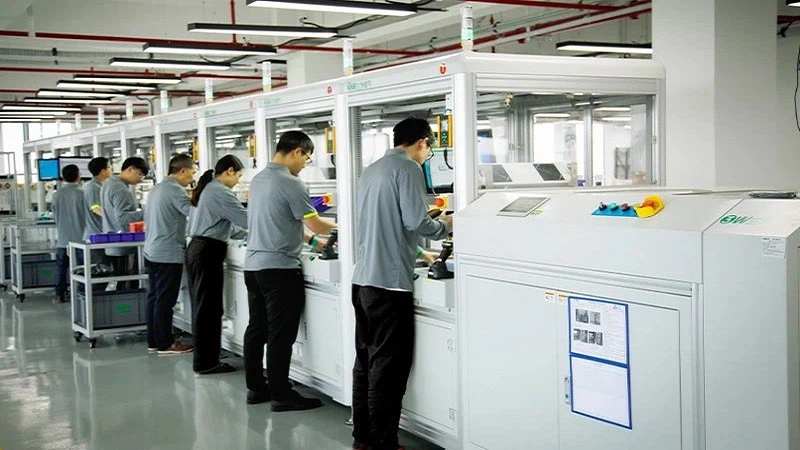
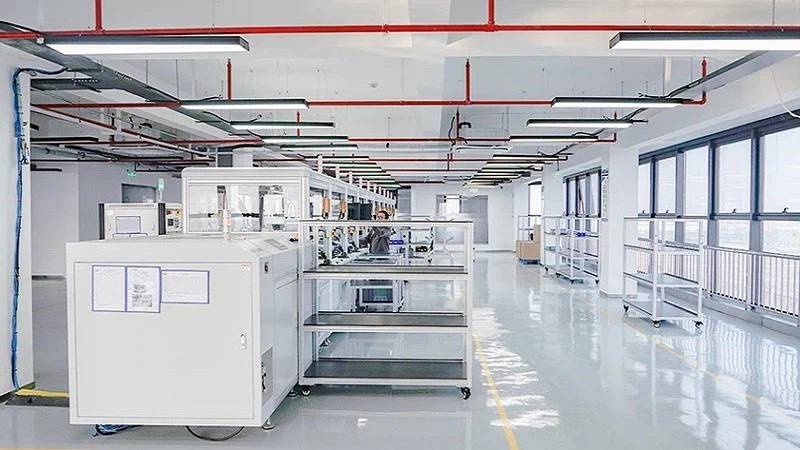
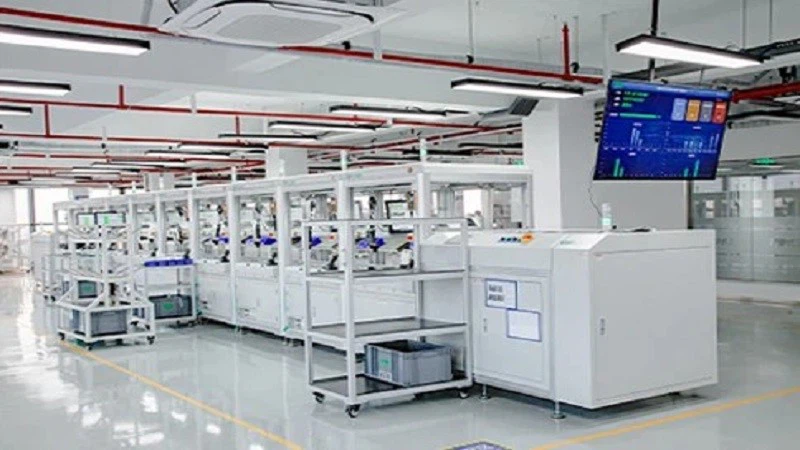
Sanwish factory is located in Hangzhou city with 10000m2 floor area and 230 high skilled employees. It is equipped with advanced production lines with daily production capacity of 500 units EV chargers and related accessories. Sanwish factory obtains ERP and MES production management systems, and can track the entire life cycle of each product sold.
Our certificate
Our products are certified with ISO9001, TUV, and CE certificates. These certifications validate that our products meet international quality standards and safety regulations, providing reliable assurance to our customers.
Production equipment
Station AC EV chargers production line, equipped with MES system. Each workstation has a code scanner and SOP display screen. SOP display screen shows production status in real time. Each workstation is equipped with a code scanner, and the MES system records the production information of each product.
Our service
1 to 1 customized professional communication, as specific as possible. It offer tailor-made solutions for customers according to customers' specific requirement. Offer competitive prices for the available products. 2 years warranty. 100% follow up within warranty period accessories support within warranty period. Replace new products for quality problems within warranty period.
EV Charging Cable Modes
Mode 1
This method enables effortless connection of an EV to a regular AC socket-outlet. However, it is not seen as safe for electric cars and has been forbidden in many countries. This method of charging is ideal for light electric vehicles like e-bikes and scooters.
Mode 2
Typically, an electric vehicle (EV) that you buy will include a charging cable known as a Mode 2. With a maximum power output of 2.3 kW, you may use this connection to charge your car using a standard household socket.
Mode 3
Your car is connected to a special EV charging station via a Mode 3 charging cable, which is the most typical type used for AC charging. They can be found in offices, homes, workplaces, residential locations, public parking slots, etc.
Mode 4
Mode 4 charging cables are designed only for DC charging, and the power is converted before being sent to the vehicle. When you charge an EV with DC, you can drastically cut down on charging time. This process is frequently referred to as fast charging or ultra-quick charging. The cables must be permanently attached to the charging station and are frequently liquid-cooled to handle the heat because this method of charging sends much more power straight to an EV’s battery.
Application Scope and Characteristics of EV Charging Cable
The EV cables may be used indoors or outdoors. When used outdoors, the charging cable must withstand the erosion of high temperatures, sunlight, rain, and automobile oils; therefore, the EV cable should be equipped with special properties such as anti-ultraviolet, ozone, high-and-low temperature resistance, and chemical attack resistance, which is suitable for the occasion. During the use, the EV cable will mechanically be damaged from the outside, such as being frequently stretched and bent or rolled by electric vehicles, so it must meet special mechanical requirements, such as bending, winding, and vehicle rolling tests.
The signal control and transmission network system of EV charging line on voltage, current, etc. during charging has the following characteristics: high pressure resistance, high temperature resistance, anti-electromagnetic interference, stable signal transmission, anti-deflection for more than 10,000 times, abrasion resistance for more than 50,000 times, abrasion resistance for more than 50,000 times, oil resistance, waterproof, acid and alkali resistance, UV resistance, etc. Its concentricity is excellent, reaching more than 80%, which makes the cable high-voltage resistance stable and reliable. The product has a small volume and a 4D bending radius, which is convenient for vehicle wiring and using between corner wiring in a narrow space with its high flexibility. Its rated temperature is 125℃, which is a tremendous technological advancement and improvement for the use of one-time forming soft insulation materials, and is essential to ensure the cable's flexibility and improve the cable's current-carrying capacity.

Criteria to Consider When Choosing the EV Charging Cable Size
Comply with your country’s official standards
The first step is to ensure that the installation complies with the electrical standards in force, specifically the relevant standard in your country. This standard defines the safety requirements and technical criteria for electrical installations. Complying with this standard is essential to avoid any risk of fire or malfunction in the installation.
Charging station power
The power of the charging station is crucial in determining the necessary cable size. The higher the power, the larger the cable size must be to support the electrical current. For example, a 3.7 kW (16 A) charging station requires a cable size of 2.5 mm², a 7.4 kW (32 A) station requires a cable size of 10 mm², and for higher power stations, such as a 22 kW (32 A in three-phase), a cable size of 16 mm² may be necessary.
Distance between your electrical panel and the charging station
The distance between the electrical panel and the charging station also influences the choice of cable size for the charging station. The greater the distance, the larger the cable size must be to compensate for voltage drop. Voltage drop is the loss of power that occurs when current travels through a long cable. An inadequate cable size for the charging station could result in inefficient and potentially hazardous charging.
Choice of number of conductors
The number of conductors in the cable depends on the type of electrical installation: for single-phase current, three conductors are necessary (phase, neutral, and ground), whereas for three-phase current, five conductors are required (three phases, neutral, and ground). These conductors are grouped within a single cable, composed of multiple metal strands. The choice between single-phase and three-phase depends on your domestic electrical installation and the charging station.
Tips For Choosing An EV Charging Cable
Choose a high-quality, durable charging cable
Electric cars can cost drivers thousands of pounds, so it’s best not to buy a cheap, low-quality cable to save a few quid. Instead, buy a more expensive charging cable that’s more durable and will last much longer. High-quality cables are more flexible, smoother to the touch and have a better grip, making them easier to charge with. Meanwhile, cheaper cables are more rigid and lightweight and might struggle in extreme weather conditions. For example, in the cold, they become stiffer and unwieldy.
Make sure the cable is recyclable
Cheaper cables will need to be replaced quicker, but all cables will eventually reach their limit and be unable to function. Whether this happens due to wear and tear or it just stops working, it’s best to get a recyclable one.
Avoid short charging cables
Shorter charging cables are the cheapest ones on the market. However, they’re not the most practical way to charge as you will stretch them and damage the cable. These won’t be a good long-term investment. Most charging stations need charging cables longer than 2m to use them. You should look to get a charging cable that is ideally 7.5m long or between 5 - 10m, as this should be long enough for most charging stations and be compact enough to store easily.
EV cable maintenance
An EV charging cable is an essential piece of equipment and it should be treated with great care, before, during and after use. We will be highlighting ways in which you can help increase the lifespan and durability of your electric vehicle charging cable. Essentially, it follows the same maintenance as any other electrical device or component.
Keep it clean and dry
When it comes to charging your electric vehicle - it is important that the pins within the charging cable's connectors, are kept clean, untampered and dry. This is the most common cause of faults within EV charging. All our cables at 4EV come with rubber caps for the connectors, which can be used when the cable isn't connected/charging. This keeps the cable's connectors dry & debris-free. The cables come with an IP rating (specific to the product) - which usually sees the cable protected to an extent from water splashes, and debris. However, it is expected and recommended that the owner of the cable is to take great care, and to regularly check that the connectors are in great condition.
Storage
Something as simple as storing your cable correctly can increase the durability of your EV charging cable. A great storage location for your cable would be somewhere dry, accessible and close to your vehicle. We often supply 4EV carry cases which can also be used to keep your charging cable safe and accessible. Not to mention, easy to carry or store in the boot of your vehicle. We would also recommend simply wiping down your cable after use, to protect the cable from any potential debris damaging the cable. It will keep the cable safe from any damage, and clean. Please not, we don't recommend wiping the connector's pins, as this could cause the connectors to become faulty from moisture.
Warranty and help
It goes without saying that sometimes faults can't be prevented - sometimes the electrical element of the cable can be the root cause of a faulty. Like any other electrical component or device - which is why we offer a 12-month warranty, if your cable does unfortunately stop providing the service you need it to.
Choose the Right EV Charging Cable Quality
All EV charging cables are not the same. There are several significant differences between high-quality and low-quality cables. Higher-quality cables are more durable, are made with better materials and stronger protections against the strains expected from everyday use.
Quality cables are also better suited for extreme conditions. One thing many cable owners will have noticed is that the cable becomes stiff and unwieldy when the temperature drops. Higher-end cables are designed to remain flexible even in severe cold, making them easier to use and stow away.
Water getting on to the terminals and into the vehicle inlet is another common problem that may cause corrosion and a poor connection over time. One way to help avoid this issue is to select a cable with a cap that doesn’ t collect water and dirt when the cable is in use.
High-end cables usually also have a more ergonomic design and a better grip. For something you may use every day, usability is worth considering.
Our Factory
Sanwish is a professional EV charger manufacturer founded by Zhejiang LHD Ocean Tidal Power, which owns the world's largest tidal power station. By the huge support from parent group, Sanwish establishes own strong R & D team, and focuses on providing various types EV charger products for customers. Sanwish philosophy: Quality first, providing customers with high quality products that can withstand long-term testing. We are building a reputed brand and we cherish cooperation with all clients. Customer satisfaction is always our top concern. Sanwish factory is located in Hangzhou city with 10000m2 floor area and 230 high skilled employees. It is equipped with advanced production lines with daily production capacity of 500 units EV chargers and related accessories. Sanwish factory obtains ERP and MES production management systems, and can track the entire life cycle of each product sold. To guarantee product quality, it is also equipped with various testing equipment. Sanwish products have been exported to more than 20 countries in Europe, the Middle East, Southeast Asia, etc. Our products are certified with ISO9001, TUV, and CE certificates. These certifications validate that our products meet international quality standards and safety regulations, providing reliable assurance to our customers.
Certificate


FAQ
As one of the most professional ev charging cable manufacturers and suppliers in China, we're featured by quality products and competitive price. Please rest assured to buy high-grade ev charging cable from our factory.
ev charger enclosures, ev charger shields, ev charger replacement parts