

DC EV Charging Station
A DC EV charger station, or a DC fast charging station, refers to a facility or location that houses multiple DC fast chargers for electric vehicles. It typically consists of several charging units or charging points installed in a designated area. These charging units are designed to provide high-power DC charging directly to electric vehicles, allowing for rapid charging times. Its infrastructure includes power distribution systems, transformers, and other equipment necessary to handle the high-power demands of fast charging. It also incorporates communication systems to facilitate the interaction between the chargers and the vehicles, ensuring a safe and efficient charging process. The DC EV charger station is a smart choice for people who want to charge quickly.
-
![DC EV Charger Home]() DC EV Charger HomeSanwish DC EV charger home has advanced structure design, and the electrical design adopts AC and DC isolation circuits, which effectively reduces electromagnetic interference and can meet the...read more
DC EV Charger HomeSanwish DC EV charger home has advanced structure design, and the electrical design adopts AC and DC isolation circuits, which effectively reduces electromagnetic interference and can meet the...read more -
![CCS DC Fast Charger]() CCS DC Fast ChargerSanwish CCS DC fast charger has emerged as a popular choice for both residential and commercial settings. Sanwish DC fast charger explores the benefits that make wall-mounted DC chargers an...read more
CCS DC Fast ChargerSanwish CCS DC fast charger has emerged as a popular choice for both residential and commercial settings. Sanwish DC fast charger explores the benefits that make wall-mounted DC chargers an...read more -
![Dc Fast Charger With A Ccs Plug]() Dc Fast Charger With A Ccs PlugSanwish DC fast charger with a CCS plug generally has high output power 120kW, and can be very fast to fully charge an electric vehicle. So this product are often found in public charging...read more
Dc Fast Charger With A Ccs PlugSanwish DC fast charger with a CCS plug generally has high output power 120kW, and can be very fast to fully charge an electric vehicle. So this product are often found in public charging...read more -
![Residential Dc Fast Charger]() Residential Dc Fast ChargerThe Sanwish residential DC fast charger is a versatile and powerful charging solution for electric vehicles. With a power output of 20KW and the ability to deliver 0-61A current, this charger is...read more
Residential Dc Fast ChargerThe Sanwish residential DC fast charger is a versatile and powerful charging solution for electric vehicles. With a power output of 20KW and the ability to deliver 0-61A current, this charger is...read more -
![20kW Mobile DC EV Charger]() 20kW Mobile DC EV ChargerSanwish 20kW Mobile DC EV charger is used for electric vehicle’s fast charging, composed of a 4.3-inch touch screen, one CCS2 charging gun and one 20kW charging modules. It’s easy for operation by...read more
20kW Mobile DC EV ChargerSanwish 20kW Mobile DC EV charger is used for electric vehicle’s fast charging, composed of a 4.3-inch touch screen, one CCS2 charging gun and one 20kW charging modules. It’s easy for operation by...read more -
![DC Electric Charger]() DC Electric ChargerThe DC electric charger boasts an ultra-compact design that makes it incredibly versatile and applicable to a wide range of use cases. Whether it's for residential use in private homes, providing...read more
DC Electric ChargerThe DC electric charger boasts an ultra-compact design that makes it incredibly versatile and applicable to a wide range of use cases. Whether it's for residential use in private homes, providing...read more -
![DC Charger Home]() DC Charger HomeDC charger home offers numerous benefits that make them an appealing choice for residential charging solutions. From faster charging speeds to space efficiency and advanced monitoring...read more
DC Charger HomeDC charger home offers numerous benefits that make them an appealing choice for residential charging solutions. From faster charging speeds to space efficiency and advanced monitoring...read more -
![CCS DC Fast Charger]() CCS DC Fast ChargerCCS DC fast charger is one of the rapid charging connector options for electric vehicles (EVs). It can be used to give your car a quick boost at a speedier time than your standard chargers. Known...read more
CCS DC Fast ChargerCCS DC fast charger is one of the rapid charging connector options for electric vehicles (EVs). It can be used to give your car a quick boost at a speedier time than your standard chargers. Known...read more -
![DC Charger for Home]() DC Charger for HomeSanwish DC charger for home adopts parallel DC charging, which allows 2 EV charge simultaneously, whilst smart allocation allows for optimum efficiency. Modular design with scalable and...read more
DC Charger for HomeSanwish DC charger for home adopts parallel DC charging, which allows 2 EV charge simultaneously, whilst smart allocation allows for optimum efficiency. Modular design with scalable and...read more -
![DC EV Charger Manufacturers]() DC EV Charger ManufacturersSanwish DC EV charger manufacturers offer a number of benefits, but most crucially, are designed to accommodate the unique needs of individual businesses, from refueling stations to apartment...read more
DC EV Charger ManufacturersSanwish DC EV charger manufacturers offer a number of benefits, but most crucially, are designed to accommodate the unique needs of individual businesses, from refueling stations to apartment...read more -
![Commercial DC Fast Charger]() Commercial DC Fast ChargerSanwish commercial DC fast charger has advanced structure design, and the electrical design adopts AC and DC isolation circuits, which effectively reduces electromagnetic interference and can meet...read more
Commercial DC Fast ChargerSanwish commercial DC fast charger has advanced structure design, and the electrical design adopts AC and DC isolation circuits, which effectively reduces electromagnetic interference and can meet...read more -
![DC Level 3 Charger]() DC Level 3 ChargerSanwish DC level 3 charger is the latest model of EV charging device. It chargers EV in DC/AC modes and charges up two cars simultaneously. Sanwish DC level 3 charger can dynamically allocated...read more
DC Level 3 ChargerSanwish DC level 3 charger is the latest model of EV charging device. It chargers EV in DC/AC modes and charges up two cars simultaneously. Sanwish DC level 3 charger can dynamically allocated...read more


Advantages of DC EV Charging Station
Fast charging speed
DC charging significantly reduces charging time compared to AC charging. DC EV chargers can deliver a large amount of energy directly to the battery at higher power levels, enabling faster charging. This is particularly advantageous for EVs that require quick charging, reducing the time spent at charging stations.
High charging efficiency
DC charging systems typically have higher charging efficiency than AC charging. By bypassing the need for converting AC to DC within the vehicle, DC charging minimizes energy losses during the charging process. This results in more efficient energy transfer, lowering overall charging costs and improving the energy utilization efficiency of charging infrastructure.
Compatibility with high-voltage batteries
DC charging is well-suited for the high-voltage batteries used in electric vehicles. High-voltage batteries can efficiently handle direct input of DC power, enabling faster charging rates without excessive heat generation. DC charging systems can accommodate high-voltage battery packs, enabling faster and more efficient charging processes.
Flexibility of charging infrastructure
DC charging infrastructure can be deployed in various locations, including public charging stations, commercial facilities, and highway rest areas. This flexibility allows people to access fast charging options conveniently, increasing the feasibility and range of electric vehicle travel. Moreover, DC fast charging stations typically support multiple charging standards and are compatible with various electric vehicle models.
Why Choose Us
Our factory
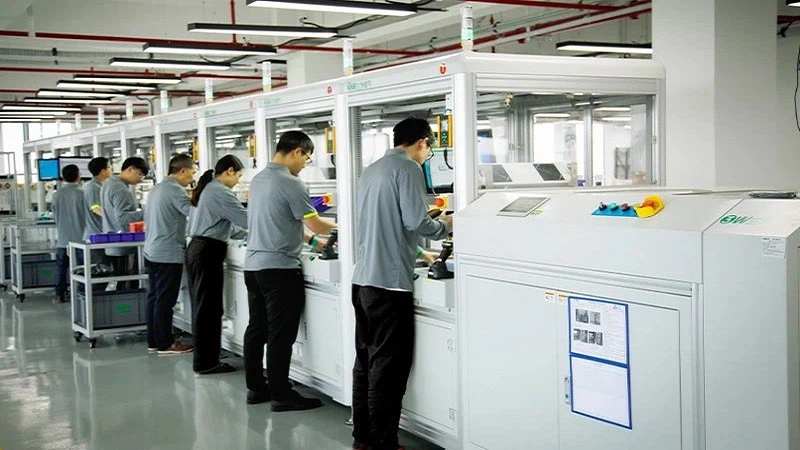
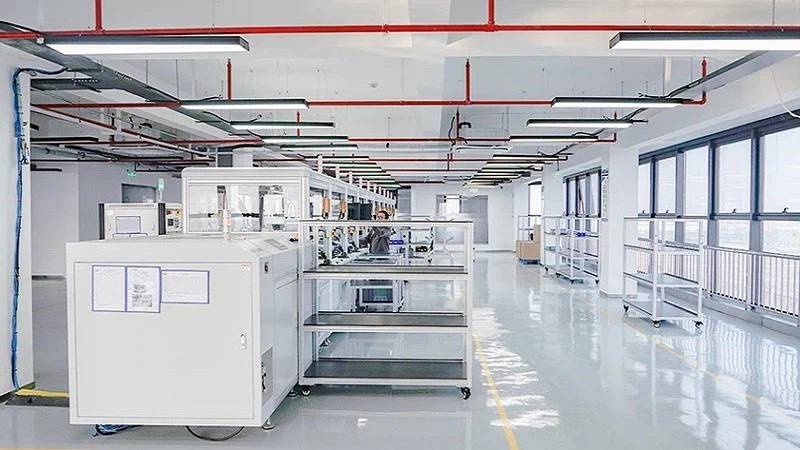
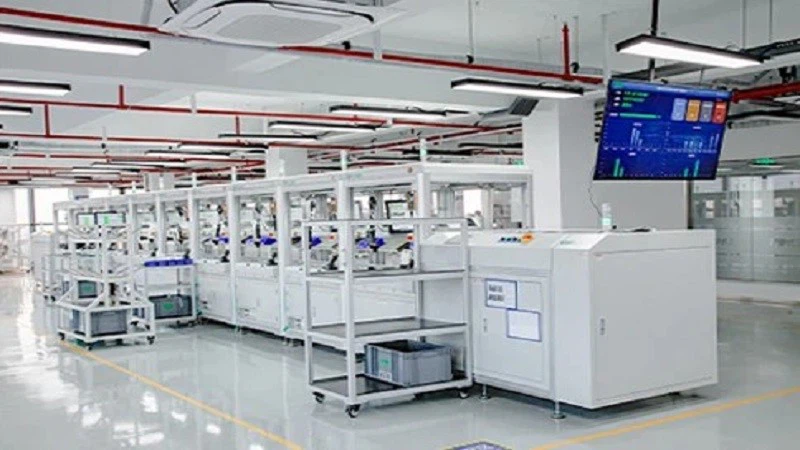
Sanwish factory is located in Hangzhou city with 10000m2 floor area and 230 high skilled employees. It is equipped with advanced production lines with daily production capacity of 500 units EV chargers and related accessories. Sanwish factory obtains ERP and MES production management systems, and can track the entire life cycle of each product sold.
Our certificate
Our products are certified with ISO9001, TUV, and CE certificates. These certifications validate that our products meet international quality standards and safety regulations, providing reliable assurance to our customers.
Production equipment
Station AC EV chargers production line, equipped with MES system. Each workstation has a code scanner and SOP display screen. SOP display screen shows production status in real time. Each workstation is equipped with a code scanner, and the MES system records the production information of each product.
Our service
1 to 1 customized professional communication, as specific as possible. It offer tailor-made solutions for customers according to customers' specific requirement. Offer competitive prices for the available products. 2 years warranty. 100% follow up within warranty period accessories support within warranty period. Replace new products for quality problems within warranty period.
Power module
The reason it’ s called a DC EV charging station is that it directly charges the battery with direct current, whereas our grid supplies alternating current. Thus, the power module converts the incoming AC supply to DC and communicates with the electric vehicle’ s Battery Management System (BMS) to dynamically adjust the voltage and current output. The power module typically consists of a power management module, controller, AC-DC converter, filter, communication module, and sensors.
Charging cable
When we charge our electric vehicles at public stations, the DC EV charging station’ s cable is usually thick and cumbersome. Some have humorously remarked that using the DC charging connector is akin to wrestling with a python, implying it requires considerable effort. The DC charging gun consists of a connector and cable designed to handle high currents, hence the need for thick cables. Although the current generation of high-power chargers (HPCs) has reduced cable diameters by using high voltage and low current, there is still room for improvement. Increasingly, supercharging stations are adopting liquid-cooled charging guns, which are more manageable in terms of size and weight, albeit at a higher cost.
Control board
The control board serves as the brain or heart of the DC EV charging stations, managing its operation and data collection. An excellent control board is vital for the reliability and safety of a DC charging station. A control board typically consists of a microcontroller unit (MCU), power management chip, communication interface chip, power switch chip, inverter, charging control chip, and display chip. Communication with the EV’ s BMS: obtaining data on the EV’ s battery status, charging speed, and other parameters, which are essential for adjusting the charging speed and output power of the charging station. Managing charging current and voltage: This task falls to the power management chip. After obtaining data about the EV’ s battery, it regulates the voltage and current output to the EV battery, maintaining it in the optimal charging state to extend battery life and ensure charging safety. Monitoring the charging process: This is the role of the charging control chip, which continuously communicates with the BMS, monitoring the entire charging process. It obtains data on the battery state, dynamically adjusts charging speed and time, and provides protection functions such as overload protection, short-circuit protection, and over-temperature protection. The quality of the control board determines the quality of the charging station. It can prevent inefficient charging, battery wear, and safety hazards.
Display screen
This integrates the software system, including a 4G module, WIFI module, OCPP software, etc. Users can control and adjust charging parameters via the touchscreen. Maintenance personnel can retrieve data and configure settings through the human-machine interaction module.
Other components
Include AC contactors, AC circuit breakers, DC contactors, surge protectors, fuses, current transformers, air switches, relays, and fans.
How to Use the DC EV Charging Station
Vehicle connection
The EV owner connects their vehicle to the DC EV charger using the appropriate charging cable and connector. The charger is designed to be compatible with different charging standards, such as CCS (Combined Charging System) or Tesla Supercharger.
Authentication and payment
Some DC EV chargers may require authentication before initiating the charging session. This can be done using an RFID card, smartphone app, or other means of identification. Payment for the charging session may also be required, depending on the charger’ s operation and payment model.
Power conversion
There are power electronics within the DC EV charger that convert the alternating current (AC) power from the electrical grid into a high-power DC suitable for charging EV batteries. This conversion process typically involves rectifiers, inverters, transformers, and other components to achieve the desired DC power output.
Battery communication
The DC EV charger communicates with the electric vehicle’ s battery management system (BMS) to ensure safe and efficient charging. This communication allows the charger to monitor the battery’ s state of charge, temperature, and other parameters. It also enables the charger to adjust the charging parameters based on the vehicle’ s requirements and battery condition.
Charging process
The DC EV charger delivers a high-power DC directly to the EV’ s battery. This bypasses the onboard charger in the vehicle, allowing for faster charging speeds compared to standard AC charging. Depending on the charger’ s power output and the vehicle’ s charging capabilities, DC fast chargers typically provide charging rates ranging from 30 kW to 360 kW or even higher.
Charging completion and disconnection
Once the charging session is complete, the charger sends a signal to the EV to indicate that the charging process has finished. The EV owner can then disconnect the charging cable from the vehicle.
Key Electrical Principles of DC EV Charging Station
A single charging module, typically 15kW, often isn’ t sufficient. Multiple modules need to work in tandem, requiring a CAN bus for equal current distribution. The charging module’ s input is a high-power supply from the grid. Given the implications for grid stability and personal safety, protective measures like air switches and lightning or leakage switches are essential.
The output from the charging pile is high voltage and current. Given the volatile nature of batteries, safety measures like fuses are crucial. Safety is paramount. Beyond input-side measures, mechanical and electronic locks, insulation checks, and discharge resistors are indispensable. The battery’ s BMS (Battery Management System) dictates the charging process. It communicates with the controller, which in turn manages the charging module.
For monitoring and management, the controller connects to a backend system via WiFi or 3G/4G. Charging isn’ t free. Meters are installed for billing, and card readers facilitate payment. Clear indicator lights on the charging pile shell provide status updates. Proper air duct design is vital for cooling. Each charging module typically has its own fan, but an additional fan within the charging pile ensures optimal cooling.

Understand your needs
First, you need to understand your specific charging needs. This includes your electric model, your expected charging speed, and where you plan to install the charger (home or business). For instance, if you’ re driving a long-range EV and covering extensive distances daily, you would require a high-power DC charging station for quicker charging. Conversely, a lower power station could suffice if your daily mileage is low and your vehicle is typically parked for extended periods.
Research available options
Next, research the various DC EV chargers available on the market. Compare their features, power ratings, and compatibility with your EV model. For instance, you can search online for various chargers, read their product descriptions, and compare their features and prices. You might find that some brands of chargers are more suitable for your needs than others.
Check compatibility
Make sure the charger you choose is compatible with your EV. This includes the type of connector your charger uses and the maximum charging power your EV can handle. This means the charger must have a connector suitable for that model and can provide the appropriate charging power.
Consider brand reputation
Check the reputation of the brand you are considering. Well-known brands usually offer reliable products and good customer service. Read reviews and ratings from other users to understand the charger’ s reliability and performance better. Suppose you are considering brands A and B for purchase. You can look at consumer reports or online reviews to see which brand’ s products are more popular and which has better customer service.
Review the technical specifications
Carefully review the technical specifications of the charger. Look at power output, charging speed, and other features that might affect your charging needs. If your EV can accept a maximum charging power of 50 kW, you must find a charger to deliver that power. Also, if you need fast charging, you might need a charger that can provide a high-output current.
Consider future needs
If you’ re planning to upgrade your EV or anticipate faster charging times in the future, it’ s essential to choose a charger that can meet those future needs. For example, if you upgrade to a larger EV in the next few years, you might need a more powerful charger to meet your future needs. So, you might choose a charger with a higher charging power.
Consider installation and maintenance costs
Some chargers may require professional installation, adding to your overall cost. Additionally, the charger may require regular maintenance or replacement parts, which should be considered during buying.
Consider usability and convenience
Consider the ease of use and convenience of your charger. If the charger is difficult to use or doesn’ t offer convenient features like remote monitoring or scheduled charging, it could get you in trouble. Some chargers have an easy-to-use touchscreen and a smartphone app that allows you to monitor your charging status remotely. If these features are essential to you, consider them when choosing a charger.
Buy a charger
Finally, once you’ ve selected a charger that suits your needs, you can buy it online or at a physical store. After purchasing, remember to arrange for professional installation if necessary. These steps provide a basic guideline for buying a DC EV charger. Spend some time researching, considering your needs, and considering various factors, and you can find the best charger for you.
Our Factory
Sanwish is a professional EV charger manufacturer founded by Zhejiang LHD Ocean Tidal Power, which owns the world's largest tidal power station. By the huge support from parent group, Sanwish establishes own strong R & D team, and focuses on providing various types EV charger products for customers. Sanwish philosophy: Quality first, providing customers with high quality products that can withstand long-term testing. We are building a reputed brand and we cherish cooperation with all clients. Customer satisfaction is always our top concern. Sanwish factory is located in Hangzhou city with 10000m2 floor area and 230 high skilled employees. It is equipped with advanced production lines with daily production capacity of 500 units EV chargers and related accessories. Sanwish factory obtains ERP and MES production management systems, and can track the entire life cycle of each product sold. To guarantee product quality, it is also equipped with various testing equipment. Sanwish products have been exported to more than 20 countries in Europe, the Middle East, Southeast Asia, etc. Our products are certified with ISO9001, TUV, and CE certificates. These certifications validate that our products meet international quality standards and safety regulations, providing reliable assurance to our customers.
Certificate


FAQ
As one of the most professional dc ev charging station manufacturers and suppliers in China, we're featured by quality products and competitive price. Please rest assured to buy high-grade dc ev charging station from our factory.
dc ev charging station industry trends, dc ev charging station performance, dc ev charging station operation