


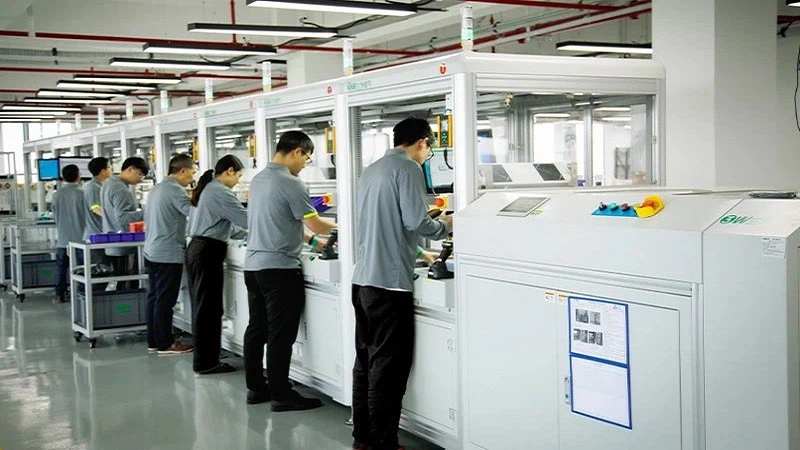
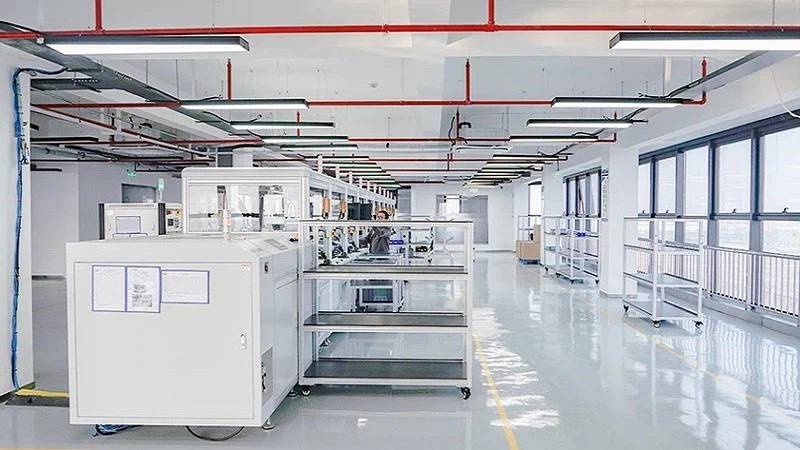
Sanwish is a professional EV charger manufacturer founded by Zhejiang LHD Ocean Tidal Power, which owns the world's largest tidal power station. By the huge support from parent group, Sanwish establishes own strong R & D team, and focuses on providing various types EV charger products for customers. Sanwish philosophy: Quality first, providing customers with high quality products that can withstand long-term testing. We are building a reputed brand and we cherish cooperation with all clients. Customer satisfaction is always our top concern. Sanwish factory is located in Hangzhou city with 10000m2 floor area and 230 high skilled employees. It is equipped with advanced production lines with daily production capacity of 500 units EV chargers and related accessories. Sanwish factory obtains ERP and MES production management systems, and can track the entire life cycle of each product sold.
Why Choose Us
Our factory
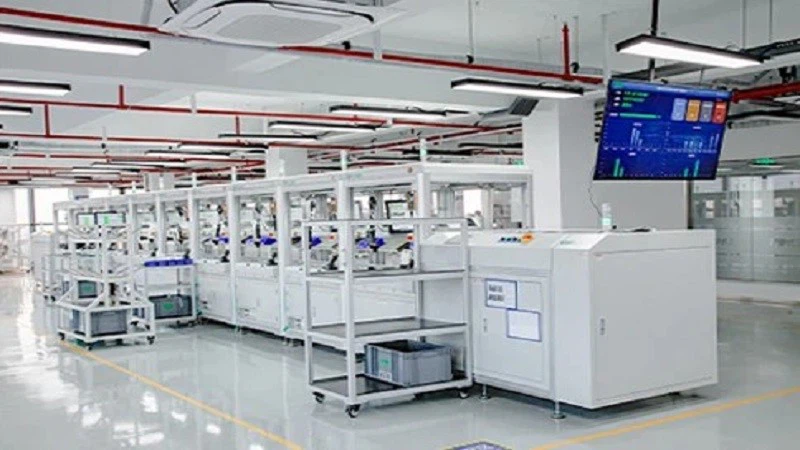
Sanwish factory is located in Hangzhou city with 10000m2 floor area and 230 high skilled employees. It is equipped with advanced production lines with daily production capacity of 500 units EV chargers and related accessories. Sanwish factory obtains ERP and MES production management systems, and can track the entire life cycle of each product sold.
Our certificate
Our products are certified with ISO9001, TUV, and CE certificates. These certifications validate that our products meet international quality standards and safety regulations, providing reliable assurance to our customers.
Production equipment
Station AC EV chargers production line, equipped with MES system. Each workstation has a code scanner and SOP display screen. SOP display screen shows production status in real time. Each workstation is equipped with a code scanner, and the MES system records the production information of each product.
Our service
1 to 1 customized professional communication, as specific as possible. It offer tailor-made solutions for customers according to customers' specific requirement. Offer competitive prices for the available products. 2 years warranty. 100% follow up within warranty period accessories support within warranty period. Replace new products for quality problems within warranty period.

Sanwish DC EV charger home has advanced structure design, and the electrical design adopts AC and DC isolation circuits, which effectively reduces electromagnetic interference and can meet the needs of different power from 120kW to 240kW. Sanwish DC EV charger home is designed with a dual-connector structure, which can meet the charging needs of two vehicles at the same time. Sanwish charger dynamically distributes power according to the needs of the EV, and can meet the needs of various sites.

Sanwish CCS DC fast charger has emerged as a popular choice for both residential and commercial settings. Sanwish DC fast charger explores the benefits that make wall-mounted DC chargers an attractive option for EV owners and businesses alike.

Sanwish DC charger for home adopts parallel DC charging, which allows 2 EV charge simultaneously, whilst smart allocation allows for optimum efficiency. Modular design with scalable and retrofittable power levels means modification and charging site maintenance couldn't be simpler.

Sanwish DC EV charger manufacturers offer a number of benefits, but most crucially, are designed to accommodate the unique needs of individual businesses, from refueling stations to apartment blocks and commercial settings. Our solutions are designed to simplify every EV charging site installation, operation, and management.

Sanwish commercial DC fast charger has advanced structure design, and the electrical design adopts AC and DC isolation circuits, which effectively reduces electromagnetic interference and can meet the needs of different power from 120kW to 240kW. Sanwish commercial DC fast charger is designed with a dual-connector structure, which can meet the charging needs of two vehicles at the same time. Sanwish DC charger dynamically distributes power according to the needs of the EV, and can meet the needs of various sites.

Sanwish DC level 3 charger is the latest model of EV charging device. It chargers EV in DC/AC modes and charges up two cars simultaneously. Sanwish DC level 3 charger can dynamically allocated total power to the outputs according to users demands or to the availability of the grid. For example, there are two same cars connected to Sanwish 180kW charger.

Sanwish fast DC charger for EV has emerged as a popular choice for both residential and commercial settings. Sanwish fast DC charger explore the benefits that make wall-mounted DC chargers an attractive option for EV owners and businesses alike.

Sanwish public DC fast charger works with the vast majority of passenger vehicles. By default, EV charge their batteries with direct current and this means that almost all accept DC fast charging.

Sanwish DC super charger adopted and with waterproof, dust-proof and anti-corrosion function. Sanwish DC super charger can achieve protection grade of IP55 and its design could meet environment protection demand. With modular design concept adopted, it has easily achieved convenient installation and commissioning and simple maintenance, etc. Sanwish DC super charger can be applied in large-scale parking lots, residential areas, shopping malls, hospitals, transfer stations, airports, docks, parks and scenic spots, etc.
What Is DC Charger Home
DC charger home offers numerous benefits that make them an appealing choice for residential charging solutions. From faster charging speeds to space efficiency and advanced monitoring capabilities, these chargers provide a convenient and reliable way to power electric vehicles. As the demand for EV continues to grow, investing in wall-mounted DC chargers represents a smart and sustainable choice for individuals and businesses alike.
Faster charging times
The main advantage of DC charger home is that it's much faster than AC charging. This can be especially beneficial on long trips where you need to recharge quickly to get back on the road.
Convenient for long distance travel
If you're traveling a long distance and need a quick recharge to continue your journey, DC charger home, often found at motorway service stations, can be incredibly useful.
Accelerated return on investment
DC charger home are more expensive to install than standard stations. However, their speed of charging provides a strategic advantage. DC fast charging can power up an EV to 80% in just 30 minutes, compared to the several hours needed by standard AC charging. This allows for a higher turnover of vehicles, enabling charging station operators to serve more customers and generate revenue more quickly.
Types of DC Charger Home
Level 1 charging
Level 1 charging uses a common 120-volt household outlet. Every electric vehicle or plug-in hybrid can be charged on Level 1 by plugging the charging equipment into a regular wall outlet. Level 1 is the slowest way to charge an EV. It adds between 3 and 5 miles of range per hour1. It can charge 200 kilometers (124 miles) in 20 hours2. Typically they' re limited to 10 or 12 amperes of current because there' s an assumption they' ll be used on a 15- or 20-amp circuit along with other electric outlets. this type of charger is not commonly used nowadays because of it' s poor charging speed.
Level 2 charing
Level 2 charging is the most commonly used means of charging an EV at home. It' s the most useful type of charging and the least meaningful designation. The only thing Level 2 means is 240 volts. Unfortunately, voltage is just one factor behind the power that charges a battery; current is the second factor, and the amount of current supported by Level 2 extends from 12 to 80 amps. So charging at this 'one' level called Level 2 for one hour could mean you' ve added 5.5 miles of range or 60 miles of range. It all depends on the vehicle (the on-board charger, for most electric cars the on-board charger is limited to 7KW or less)and the charging unit, which have their own current ratings. The Level 2 charger can have a rating of 12, 16, 20, 24, 32, 40, 48 or 64 amps - and some can be set to throttle down to lower current levels to accommodate being fed by less robust circuits.and it' s also limited by the on-board charger of the electric cars. Level 2 charging is a compromise that users make with reality.

How Fast Is DC Charger Home
As a general rule, DC fast chargers charge your EV much quicker than AC chargers, usually within an hour. This is simply because they use more power, forcing your battery to charge faster. As will be explained in further detail in the next section, providing an exact figure for the speed of DC fast charging is impossible.
Set a charge limit of 80% in your car. Many studies on lithium-ion batteries conclude that charging beyond this point increases wear. The charging power also drops off significantly, so you should unplug it to allow someone else to charge their EV. Regularly check your car's charge state by using an app, checking the onboard infotainment system, or peering through the window. Check your car's acceptance rate (found in the owner's manual). There's no point spending a long time looking for a powerful DC fast charger when your car can't charge faster than its acceptance rate anyway! Drive economically as much as possible, making the battery charge last as long as possible.
Practical Considerations for DC Charger Home Installation
When considering the addition of an electric vehicle charger to your home, the process involves a myriad of practical considerations that directly influence the installation's feasibility, complexity, and overall cost. Not all homes are immediately ready or suitable for such an upgrade without significant modifications. From the existing electrical infrastructure of your residence to the type of EV charger best suited to your needs, each factor plays a critical role in determining how smoothly the installation process can unfold. This table outlines the key considerations that homeowners should evaluate before embarking on the installation of an EV charger, thereby ensuring the project aligns with their electrical capabilities, budget, and local regulations.
|
Consideration Factors |
Impact on Feasibility of Installation |
|
Electrical Capacity |
Your home must have the necessary electrical service to support the EV charger in addition to your existing electrical load. An insufficient electrical capacity might require expensive upgrades. Note: DC Fast Chargers typically demand power levels beyond residential capabilities. |
|
Type of EV Charger |
Level 1 and Level 2 chargers are feasible for home installation, requiring different wiring and circuit needs. DC Fast Chargers, while offering the quickest charging times, are generally not feasible for home installation due to their excessive power requirements. |
|
Location of the Charger |
Wiring length and exposure to weather influence installation costs and complexity for Level 1 and Level 2 chargers. DC Fast Chargers are suited for commercial locations due to their size and power needs. |
|
Local Building Codes and Regulations |
Regulations and permit requirements affect installation feasibility for all charger types. Compliance with local codes is mandatory. Installing a DC Fast Charger at home is unlikely due to regulatory and practical constraints. |
|
Budget |
Costs vary widely based on required electrical upgrades, charger type, and labor. |
|
Utility Company Requirements |
Utilities may have specific requirements or incentives affecting charger choice and costs. The high power requirement of DC Fast Chargers often makes them unsuitable for home use but beneficial for commercial applications. |
How to Install a DC Charger Home
Location selection
Selecting an easily visible location will increase utilization. The location should be close to the necessary electrical infrastructure and have sufficient space for installation and vehicle access.
Electrical infrastructure assessment
Evaluate the existing electrical setup to ensure it can support the high power needs of the DC fast charger, such as a 480-volt connection. Plan for any necessary upgrades, such as transformers or new wiring.
Equipment selection
Select DC fast-charging equipment based on power requirements, vehicle compatibility, and usage expectations. Choose a scalable and network-connected model for easy management and future expansion.
Installation
Hire a certified electrician or contractor experienced in installing high-power electrical systems. Include safety and accessibility features such as bollards and adequate lighting.
Connection and testing
Connect the device to the power grid under professional supervision to ensure the installation is safe and complies with standards. Extensive testing to verify functionality and safety before commissioning.
Commissioning
To formally commission a charging station for public or private use and provide training on proper use and safety procedures.
Maintenance and monitoring
Develop daily maintenance plans and use network functions to remotely monitor site usage and operating status to resolve any issues promptly.
Our Factory
Sanwish is a professional EV charger manufacturer founded by Zhejiang LHD Ocean Tidal Power, which owns the world's largest tidal power station. By the huge support from parent group, Sanwish establishes own strong R & D team, and focuses on providing various types EV charger products for customers. Sanwish philosophy: Quality first, providing customers with high quality products that can withstand long-term testing. We are building a reputed brand and we cherish cooperation with all clients. Customer satisfaction is always our top concern. Sanwish factory is located in Hangzhou city with 10000m2 floor area and 230 high skilled employees. It is equipped with advanced production lines with daily production capacity of 500 units EV chargers and related accessories. Sanwish factory obtains ERP and MES production management systems, and can track the entire life cycle of each product sold. To guarantee product quality, it is also equipped with various testing equipment. Sanwish products have been exported to more than 20 countries in Europe, the Middle East, Southeast Asia, etc. Our products are certified with ISO9001, TUV, and CE certificates. These certifications validate that our products meet international quality standards and safety regulations, providing reliable assurance to our customers.
Certificate


FAQ
Hot Tags: dc charger home, China dc charger home manufacturers, suppliers, dc ev charging station user experience, dc ev charging station importer, dc ev charging station exporter, dc car charging stations, dc ev charging station event, dc ev charging station market share


