


Sanwish is a professional EV charger manufacturer founded by Zhejiang LHD Ocean Tidal Power, which owns the world's largest tidal power station. By the huge support from parent group, Sanwish establishes own strong R & D team, and focuses on providing various types EV charger products for customers. Sanwish philosophy: Quality first, providing customers with high quality products that can withstand long-term testing. We are building a reputed brand and we cherish cooperation with all clients. Customer satisfaction is always our top concern.
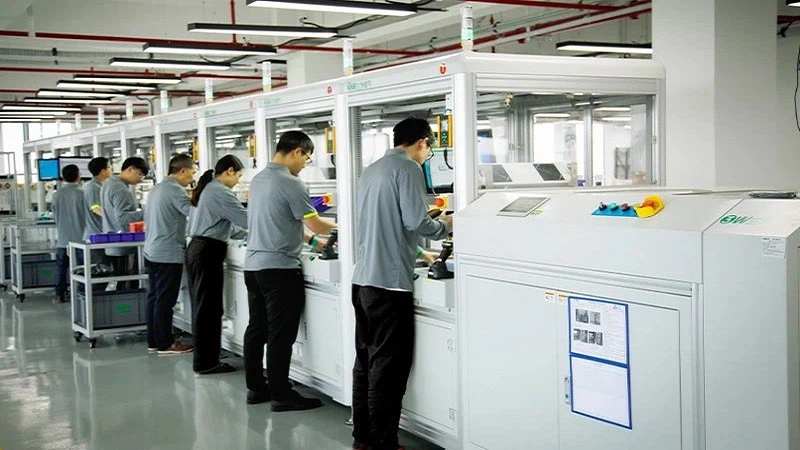
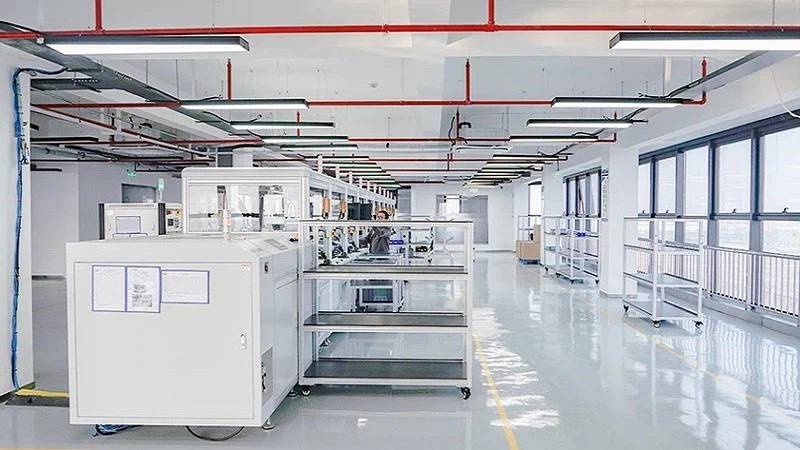
Sanwish factory is located in Hangzhou city with 10000m2 floor area and 230 high skilled employees. It is equipped with advanced production lines with daily production capacity of 500 units EV chargers and related accessories. Sanwish factory obtains ERP and MES production management systems, and can track the entire life cycle of each product sold.
Why Choose Us
Our factory
Sanwish factory is located in Hangzhou city with 10000m2 floor area and 230 high skilled employees. It is equipped with advanced production lines with daily production capacity of 500 units EV chargers and related accessories. Sanwish factory obtains ERP and MES production management systems, and can track the entire life cycle of each product sold.
Our certificate
Our products are certified with ISO9001, TUV, and CE certificates. These certifications validate that our products meet international quality standards and safety regulations, providing reliable assurance to our customers.
Production equipment
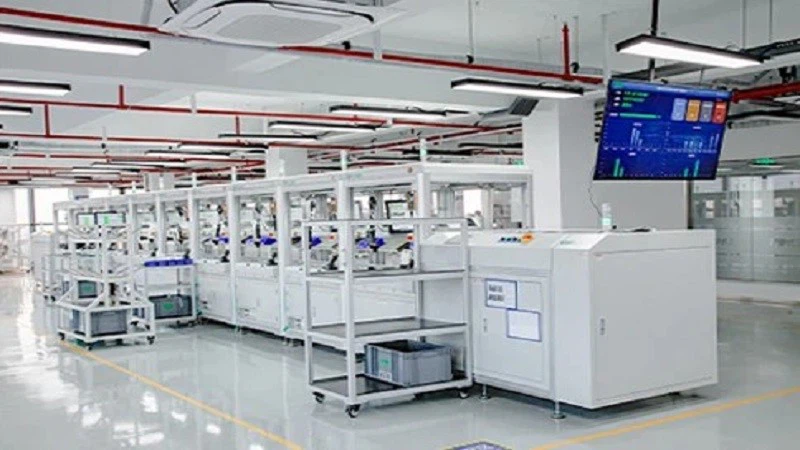
Station AC EV chargers production line, equipped with MES system. Each workstation has a code scanner and SOP display screen. SOP display screen shows production status in real time. Each workstation is equipped with a code scanner, and the MES system records the production information of each product.
Our service
1 to 1 customized professional communication, as specific as possible. It offer tailor-made solutions for customers according to customers' specific requirement. Offer competitive prices for the available products. 2 years warranty. 100% follow up within warranty period accessories support within warranty period. Replace new products for quality problems within warranty period.

Sanwish DC EV charger home has advanced structure design, and the electrical design adopts AC and DC isolation circuits, which effectively reduces electromagnetic interference and can meet the needs of different power from 120kW to 240kW. Sanwish DC EV charger home is designed with a dual-connector structure, which can meet the charging needs of two vehicles at the same time. Sanwish charger dynamically distributes power according to the needs of the EV, and can meet the needs of various sites.

Sanwish CCS DC fast charger has emerged as a popular choice for both residential and commercial settings. Sanwish DC fast charger explores the benefits that make wall-mounted DC chargers an attractive option for EV owners and businesses alike.

Sanwish DC charger for home adopts parallel DC charging, which allows 2 EV charge simultaneously, whilst smart allocation allows for optimum efficiency. Modular design with scalable and retrofittable power levels means modification and charging site maintenance couldn't be simpler.

Sanwish DC EV charger manufacturers offer a number of benefits, but most crucially, are designed to accommodate the unique needs of individual businesses, from refueling stations to apartment blocks and commercial settings. Our solutions are designed to simplify every EV charging site installation, operation, and management.

Sanwish commercial DC fast charger has advanced structure design, and the electrical design adopts AC and DC isolation circuits, which effectively reduces electromagnetic interference and can meet the needs of different power from 120kW to 240kW. Sanwish commercial DC fast charger is designed with a dual-connector structure, which can meet the charging needs of two vehicles at the same time. Sanwish DC charger dynamically distributes power according to the needs of the EV, and can meet the needs of various sites.

Sanwish DC level 3 charger is the latest model of EV charging device. It chargers EV in DC/AC modes and charges up two cars simultaneously. Sanwish DC level 3 charger can dynamically allocated total power to the outputs according to users demands or to the availability of the grid. For example, there are two same cars connected to Sanwish 180kW charger.

Sanwish DC car charging stations are developed for public commercial use with modern appearance design and user-friendly operation interface. The modular design and overall output power can be configured arbitrarily function and reduce the drive waiting time, enhance the utilization rate of the charger and easy to operate and maintenance.

Sanwish fast DC charger for EV has emerged as a popular choice for both residential and commercial settings. Sanwish fast DC charger explore the benefits that make wall-mounted DC chargers an attractive option for EV owners and businesses alike.

Sanwish DC charger home offers numerous benefits that make them an appealing choice for residential charging solutions. From faster charging speeds to space efficiency and advanced monitoring capabilities, these chargers provide a convenient and reliable way to power electric vehicles. As the demand for EV continues to grow, investing in wall-mounted DC chargers represents a smart and sustainable choice for individuals and businesses alike.
The DC electric charger boasts an ultra-compact design that makes it incredibly versatile and applicable to a wide range of use cases. Whether it's for residential use in private homes, providing a convenient way to charge personal electric vehicles, or for commercial applications in busy workplace offices, shopping centers, hotels, and parking structures, the charger offers a safe and reliable solution. For residential users, the charger's compact size allows for easy installation in tight spaces like garages or driveways, while still providing fast and efficient charging capabilities. The safety features like over-current and over-voltage protection ensure that homeowners can charge their electric vehicles with peace of mind. For commercial applications, the charger is equally suited. Its reliability and durability make it a perfect fit for public charging stations in shopping centers, hotels, and parking structures, where high usage and heavy traffic are the norm. The charger's ground fault detection system adds an extra layer of safety for both users and operators.
Advantages of DC Electric Charger
Compatibility with High-voltage Batteries
DC electric charger is well-suited for the high-voltage batteries used in electric vehicles. High-voltage batteries can efficiently handle direct input of DC power, enabling faster charging rates without excessive heat generation. DC electric charger systems can accommodate high-voltage battery packs, enabling faster and more efficient charging processes.
Flexibility of Charging Infrastructure
DC electric charger infrastructure can be deployed in various locations, including public charging stations, commercial facilities, and highway rest areas. This flexibility allows people to access fast charging options conveniently, increasing the feasibility and range of electric vehicle travel.
Facilitating Long-distance Travel
A robust DC fast charging network is crucial for enabling long-distance travel with electric vehicles. By providing fast charging options along highways and major routes, DC electric charger allows drivers to quickly recharge their vehicle' s battery and continue their journey, reducing range anxiety and driving the widespread adoption of electric vehicles.
Accelerated return on investment
Yes, DC fast charging stations are more expensive to install than standard stations. However, their speed of charging provides a strategic advantage. DC Fast Charging can power up an EV to 80% in just 30 minutes, compared to the several hours needed by standard AC charging. This allows for a higher turnover of vehicles, enabling charging station operators to serve more customers and generate revenue more quickly.
What Factors Impact the Rate of DC Electric Charger
Temperature
If it' s extremely cold or hot, you may find that charging takes longer than usual because every EV battery has an optimal operating temperature. When temperatures fall outside this range, charging may be slower.
Power rating
Not all DC electric chargers are made equally. Power ratings can vary, from 24kW at the lower end to 350kW at the top of the range. Any charger with a power rating higher than 43kW is typically classed as a rapid charger. The higher the power rating, the faster your electric vehicle will charge, as long as it is compatible with the given kW rating.
State of charge (SoS)
This is how much charge is left in your EV battery, usually displayed in percentages. A battery that has little energy left will charge faster than a battery that is almost full. DC chargers work fastest between 20% to 80% SoS. Outside this range, DC fast charging rates may be lower.
Busyness
A busy charging station, used by multiple EVs at the same time, will charge your car more slowly. The reason for this is how the power supply is set up. DC electric chargers, and any other chargers, are likely connected to the same electricity supply. If demand is higher, every charger connected to the same source will slow down.licabo ipsam doloribus expedita, nulla laudantium odit tempora dolor ratione voluptatum, rerum impedit eius culpa? Iste?.
Use DC fast charging to your advantage
Now you know how DC fast charging works, you' ll be able to make the most of this option. The speed and convenient location of these chargers is ideal for a quick top up while on the road. Fast charging is best reserved for occasional use, as this way you' ll avoid higher charging costs and preserve your battery health for longer. If you have access to an AC charger, whether that' s on your drive at home or in a local overnight car park, it' s still the best option to recharge your EV battery on a day-to-day basis. Leave it plugged in while you rest, this way you' re charged and ready to go when you need it.

Unlike Level 1 and 2 charging, which use alternating current (AC) supplied by residential and commercial power sources, DC fast charging-also known as direct current charging-uses, as the name implies, direct current. This allows for a much higher power transfer, significantly reducing charging time. To put it in perspective, DC electric chargers can replenish up to 80% of a battery' s capacity in just 20 to 30 minutes.
This is achieved by converting the AC power from the grid into DC power before it reaches the vehicle. The charger bypasses the car' s onboard charger, delivering the DC power directly to the battery. This method allows for a high-power transfer, with some chargers capable of delivering up to 350 kW. When the charger and the vehicle 'shake hands', though, the actual rate of charge can be considerably lower. That' s a safeguard in place since many EVs aren' t yet capable of receiving DC fast charging at the highest rates.
Speed of DC Electric Charger
The rate of charging for a DC fast charging station is gauged as its maximum output (in kilowatts – kW). If we talk about light-duty vehicles, you' ll notice that the charging stations range from 50 kW to as high as 350 kW. It is a thumb rule that lower the kW, slower the charge. However, it is important to note that selecting a higher-power rated DC electric charger over a lower-powered one does not assure that the EV will charge faster. This is exactly where the acceptance rate of your EV comes into play. In layman' s words, the rate of acceptance of an EV is the utmost amount of power it can accept (measured in kW). Consider an EV with an acceptance rate of 50 kW, which is considered quite slow in today's times. For this EV, the peak charging rate would be nearly the same even if you plug in with a fast DC charger, rated at 62.5 kW, 150 kW, or 350 kW.
An EV that can be charged upto 250 kW which is the acceptance rate for that EV, if connected to a station rated at 150 kW wouldn' t be able to achieve its charging peak. In the EV current scenario, the acceptance rate of on-road EVs varies from somewhere around 100 kW to 250 kW. Understanding the essence of an EV' s charging curve can curb range anxiety, particularly on longer commutes while deciding the logistics or determining the nearest EV charging station. It is advisable to switch between chargers (like a home charger, level 2 AC charger, or a DC electric charger) saving time in lingering for a long period at a given location. Normally, it is only for about a part of the charging session that an EV would charge at its maximum rate and that is in the lower half of the battery pack. The charing peak depends upon the electric car. The arbitrary which is generally constant throughout the charging curves is the ramp down in the charging speed which is approximately at about 80% charge to shield the battery.
Typical DC charger power levels
DC electric chargers typically have power levels from 50kW up to 350kW. 50kW chargers can add about 100 miles of range in 30 minutes, while ultra-fast 350kW models can add 200+ miles in 15 minutes. Higher power translates to less charging downtime for drivers. Consider what charging speed you need, as higher power requires more robust electrical infrastructure. An EV charger manufacturer can help determine the optimal power level based on your site and budget.
DC charger electrical service requirements
Installing DC electric chargers requires coordinating with your utility to install appropriate electrical service. Chargers over 50kW often require 480V 3-phase power at 200-1000A capacity. Power requirements go up dramatically for ultra-fast 100kW+ chargers. Working closely with an EVSE provider and electrician on-site assessments and utility coordination is crucial to ensure sufficient electrical infrastructure. Costs vary widely based on site factors.
DC charger connector types
Most vehicles support one or both. Having both connectors at each station allows you to support all DC capable vehicles. An EV charger company can advise on the best connector strategy based on your locations and target vehicles.
DC charger networking, management & payment
Reputable commercial EV chargers offer open charge point network protocols like OCPP to manage, control, configure, and monitor your chargers remotely through software. Central management provides usage stats, diagnostics, access control, cost optimization, driver payment processing, and other benefits. Select chargers that support open software integration for maximum flexibility and scalability as your charging network grows.
Facilities needed for DC fast charging sites
Quality DC fast charging sites require adequate parking spaces, lighting, signage, markings, canopies, and electrical rooms. ADA compliance is also mandatory. Sites must have sufficient power imported, with concrete pads for chargers and spare parts inventory stored locally. Well-designed layouts avoid crossing vehicle and pedestrian paths.
Our Factory
Sanwish is a professional EV charger manufacturer founded by Zhejiang LHD Ocean Tidal Power, which owns the world's largest tidal power station. By the huge support from parent group, Sanwish establishes own strong R & D team, and focuses on providing various types EV charger products for customers. Sanwish philosophy: Quality first, providing customers with high quality products that can withstand long-term testing. We are building a reputed brand and we cherish cooperation with all clients. Customer satisfaction is always our top concern. Sanwish factory is located in Hangzhou city with 10000m2 floor area and 230 high skilled employees. It is equipped with advanced production lines with daily production capacity of 500 units EV chargers and related accessories. Sanwish factory obtains ERP and MES production management systems, and can track the entire life cycle of each product sold. To guarantee product quality, it is also equipped with various testing equipment. Sanwish products have been exported to more than 20 countries in Europe, the Middle East, Southeast Asia, etc. Our products are certified with ISO9001, TUV, and CE certificates. These certifications validate that our products meet international quality standards and safety regulations, providing reliable assurance to our customers.
Certificate


FAQ
Hot Tags: dc electric charger, China dc electric charger manufacturers, suppliers, dc ev charging station environmental protection, dc ev charging station regulations, dc ev charging station financial analysis, dc ev charging station warranty, dc ev charging station distribution channel, dc ev charging station funding


