


Sanwish is a professional EV charger manufacturer founded by Zhejiang LHD Ocean Tidal Power, which owns the world's largest tidal power station. By the huge support from parent group, Sanwish establishes own strong R & D team, and focuses on providing various types EV charger products for customers. Sanwish philosophy: Quality first, providing customers with high quality products that can withstand long-term testing. We are building a reputed brand and we cherish cooperation with all clients. Customer satisfaction is always our top concern. Sanwish factory is located in Hangzhou city with 10000m2 floor area and 230 high skilled employees. It is equipped with advanced production lines with daily production capacity of 500 units EV chargers and related accessories. Sanwish factory obtains ERP and MES production management systems, and can track the entire life cycle of each product sold.
Why Choose Us
Our factory
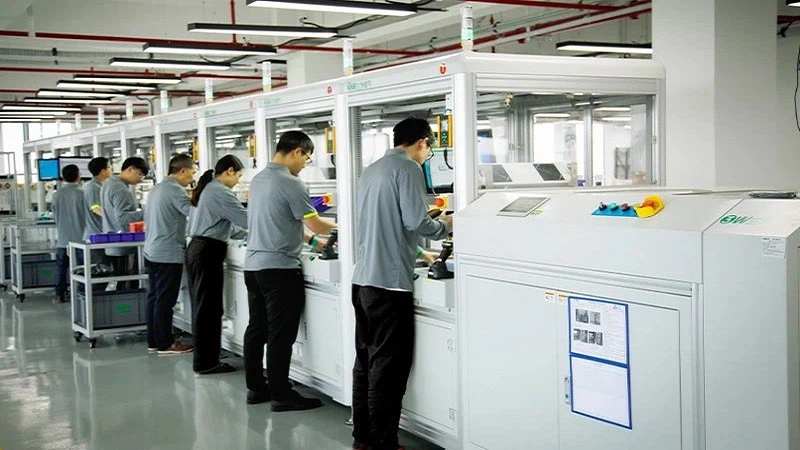
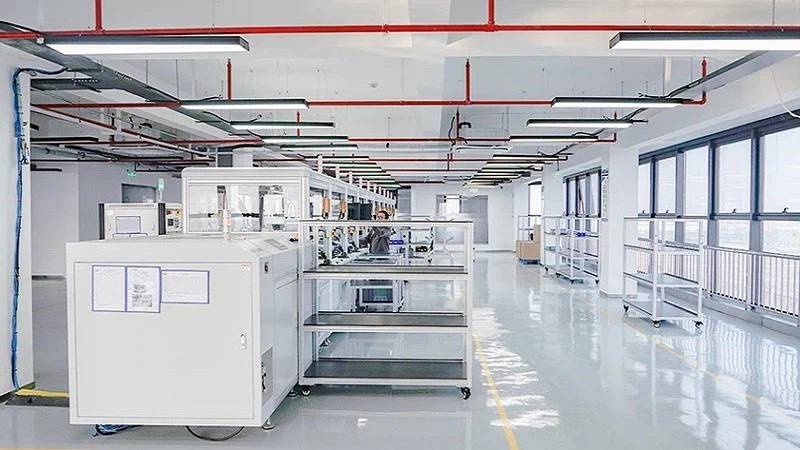
Sanwish factory is located in Hangzhou city with 10000m2 floor area and 230 high skilled employees. It is equipped with advanced production lines with daily production capacity of 500 units EV chargers and related accessories. Sanwish factory obtains ERP and MES production management systems, and can track the entire life cycle of each product sold.
Our certificate
Our products are certified with ISO9001, TUV, and CE certificates. These certifications validate that our products meet international quality standards and safety regulations, providing reliable assurance to our customers.
Production equipment
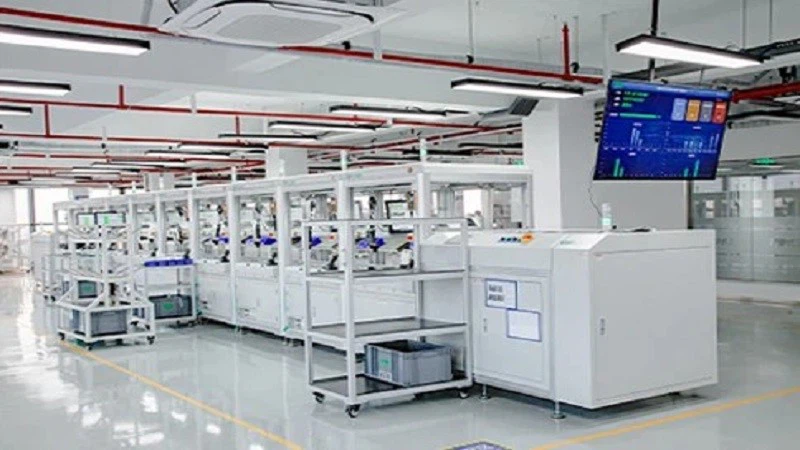
Station AC EV chargers production line, equipped with MES system. Each workstation has a code scanner and SOP display screen. SOP display screen shows production status in real time. Each workstation is equipped with a code scanner, and the MES system records the production information of each product.
Our service
1 to 1 customized professional communication, as specific as possible. It offer tailor-made solutions for customers according to customers' specific requirement. Offer competitive prices for the available products. 2 years warranty. 100% follow up within warranty period accessories support within warranty period. Replace new products for quality problems within warranty period.

Sanwish DC EV charger home has advanced structure design, and the electrical design adopts AC and DC isolation circuits, which effectively reduces electromagnetic interference and can meet the needs of different power from 120kW to 240kW. Sanwish DC EV charger home is designed with a dual-connector structure, which can meet the charging needs of two vehicles at the same time. Sanwish charger dynamically distributes power according to the needs of the EV, and can meet the needs of various sites.

Sanwish DC charger for home adopts parallel DC charging, which allows 2 EV charge simultaneously, whilst smart allocation allows for optimum efficiency. Modular design with scalable and retrofittable power levels means modification and charging site maintenance couldn't be simpler.

Sanwish DC EV charger manufacturers offer a number of benefits, but most crucially, are designed to accommodate the unique needs of individual businesses, from refueling stations to apartment blocks and commercial settings. Our solutions are designed to simplify every EV charging site installation, operation, and management.

Sanwish commercial DC fast charger has advanced structure design, and the electrical design adopts AC and DC isolation circuits, which effectively reduces electromagnetic interference and can meet the needs of different power from 120kW to 240kW. Sanwish commercial DC fast charger is designed with a dual-connector structure, which can meet the charging needs of two vehicles at the same time. Sanwish DC charger dynamically distributes power according to the needs of the EV, and can meet the needs of various sites.

Sanwish DC level 3 charger is the latest model of EV charging device. It chargers EV in DC/AC modes and charges up two cars simultaneously. Sanwish DC level 3 charger can dynamically allocated total power to the outputs according to users demands or to the availability of the grid. For example, there are two same cars connected to Sanwish 180kW charger.

Sanwish DC car charging stations are developed for public commercial use with modern appearance design and user-friendly operation interface. The modular design and overall output power can be configured arbitrarily function and reduce the drive waiting time, enhance the utilization rate of the charger and easy to operate and maintenance.

Sanwish fast DC charger for EV has emerged as a popular choice for both residential and commercial settings. Sanwish fast DC charger explore the benefits that make wall-mounted DC chargers an attractive option for EV owners and businesses alike.

Sanwish DC charger home offers numerous benefits that make them an appealing choice for residential charging solutions. From faster charging speeds to space efficiency and advanced monitoring capabilities, these chargers provide a convenient and reliable way to power electric vehicles. As the demand for EV continues to grow, investing in wall-mounted DC chargers represents a smart and sustainable choice for individuals and businesses alike.

Sanwish public DC fast charger works with the vast majority of passenger vehicles. By default, EV charge their batteries with direct current and this means that almost all accept DC fast charging.
CCS DC fast charger is one of the rapid charging connector options for electric vehicles (EVs). It can be used to give your car a quick boost at a speedier time than your standard chargers. Known as the most versatile rapid charging connector, it' s popular across Europe and North America for a quick charge. It also offers a higher power rating than other rapid types, and car support larger, ultra-rapid chargers.
Essentially, the CCS plug is a fancied-up version of the Type 2 plug that is universal for charging EVs. When you see a CCS connector, it will look just like a Type 2 set-up with an additional two connector holes. When using a standard Type 2 charger, the bottom two holes on the connector will be free. These are only used by the CCS plug.
Advantages of CCS DC Fast Charger
Versatility
The CCS DC fast charger' s dual AC and DC capabilities make it versatile, suitable for both everyday charging and long-distance travel.
Faster charging
With the DC fast charging component, CCS DC fast chargers offer rapid charging, providing a significant amount of power to the EV' s battery in a short time.
Widespread adoption
The CCS standard is widely adopted globally, ensuring compatibility across various EV models and manufacturers.
Widespread compatibility
CCS DC fast charger have become a standardized solution, compatible with a wide range of EV makes and models. This compatibility ensures that EV drivers can easily find and use a CCS charging station, reducing any concerns about charger compatibility.

Charging communication
Unlike the connector and inlet, which depend on the geographical location, the charging communication is the same around the globe. Generally two types of communication can be differentiated. Basic signaling (BS) is done using a pulse-width modulation (PWM) signal which is transferred over the control pilot (CP) contact according to IEC 61851-1. This communication is used for safety-related functions, indicating for example if the connector is plugged in, before contacts are made live (or energized) and if both charging station and electric vehicle are ready for charging. AC charging is possible using the PWM signal only. In this case the charging station uses the duty cycle of the PWM to inform the onboard charger of the maximum available current at the charging station (A pulse width of 5% indicates that HLC shall be used). High-level communication (HLC) is done by modulating a high-frequency signal over the CP contact (also known as Power Line Communication or PLC) to transfer more complex information, which may be used e.g. for DC charging or for other services such as "plug and charge" or load balancing. High-level communication is based on the standard DIN SPEC 70121 and the ISO/IEC 15118-series.
Load balancing
CCS differentiates between two methods of load balancing. Reactive load balancing allows changing the energy flow from Electric Vehicle Supply Equipment (EVSE) to EV instantaneously to a specific limit. Scheduled load balancing supports reactive load balancing and additionally a planning of the energy flow from EVSE to EV with e.g. different power limits and cost indicators over time. It may for example be used to optimize energy distribution in a smart grid.
Charging authorization modes
For charge authorization, generally two approaches are foreseen. With "plug and charge", the user plugs in their vehicle and an automated authentication and authorization process is started without any further user interaction. Payment is performed automatically. With "external payment", the user has to identify with an RFID card at the terminal, or conduct a payment with a payment card, before they can proceed with charging.
Vehicle coupler
The vehicle coupler is composed of the vehicle connector, which is mounted at the end of a flexible cable, and the vehicle inlet, the counterpart of the connector, which is located within the vehicle. The CCS couplers were based on the Type 1 coupler, and Type 2 coupler as described in IEC 62196-2. One of the challenges of the Combined Charging System was to develop a vehicle inlet which is compatible with both the existing AC vehicle connectors and additional DC contacts. For both Type 1 and Type 2 this has been accomplished by extending the inlet with two additional DC contacts below the existing AC and communication contacts. The resulting new configurations are commonly known as Combo 1 and Combo 2.
How to Charge Your EV with CCS DC Fast Charger
Locate a CCS DC fast charger
Find a CCS charging station using a charging station locator app, website, or your EV's built-in navigation system. You can also check the compatibility of the charger with your EV model.
Park and prepare
Park your EV in front of the CCS DC fast charger, ensuring that the charging cable can reach your vehicle's charging port. Make sure your EV is turned off or in "park" mode.
Unlock the charger
Some chargers require you to scan a QR code, use an app, or tap a card to initiate the charging session. Follow the instructions provided by the charger's operator.
Open the charging port
If your EV has a locked charging port, unlock it using your key fob or through the vehicle's touchscreen control panel.
Connect the cable
Grab the CCS charging cable and insert it into the CCS connector on your vehicle. The connector should click into place securely.
Initiate charging
Once the cable is securely connected, confirm the charging session on the charger's interface or through the app. Follow the prompts to start the charging process.
Charging progress
Monitor the charging progress on the charger's screen or app. It typically displays information such as charging speed, time remaining, and energy delivered.
Safety precautions
While your EV is charging, it's essential to follow safety guidelines. Stay near your vehicle, avoid leaving it unattended, and be mindful of the charging cable to prevent tripping hazards.
Ending the session
When your EV is adequately charged or when you're ready to continue your journey, end the charging session. This may involve using the charger's interface, app, or tapping a card again.
Disconnect the cable
Once the charging session is terminated, carefully remove the CCS connector from your EV. Place the cable back in its holder or the charger's designated area.
Close the charging port
Securely close and lock your EV's charging port, if applicable.
CCS DC fast chargers utilize a standardized connector and communication protocol, enabling seamless compatibility between the charger and the EV. The standardized connector ensures that any EV equipped with a CCS port can be charged using a CCS DC fast charger. One of the key features of CCS DC fast chargers is their ability to support bidirectional power flow. This means that not only can they charge your EV's battery, but they can also allow power to flow from your vehicle back into the grid or other energy storage systems. This bidirectional capability opens up possibilities for vehicle-to-grid technology and energy management solutions.
CCS DC fast chargers also support different charging levels, including DC fast charging. Depending on your EV model and its maximum charging capacity, you can take advantage of high-power DC fast charging at compatible CCS stations. This allows for rapid top-ups during long journeys or when you're in need of a quick charge. Understanding how a CCS DC fast charger works is essential for EV owners who want to make the most out of their charging experience. By utilizing these advanced chargers, you can enjoy faster and more convenient charging sessions while contributing to the development of sustainable transportation infrastructure.
CCS connectors vary in power ratings, usually between 50-350kW. Even at 50kW, the connector's lowest output but most popular, you can expect around 75 miles of charge in just 30 minutes (based on a 60kWh battery). 350kW connectors are not all that common right now, but those can offer up to 525 miles of charge in just 30 minutes, while the more common 150kW set-ups offer 225 miles in the same time. In comparison, a Type 2 AC connector can supply 7kW from a single-phase set-up, which can add around 25 miles to a 60kW battery in an hour. CCS charging is much quicker and will help you top up your battery in much less time than a standard charger.
Our Factory
Sanwish is a professional EV charger manufacturer founded by Zhejiang LHD Ocean Tidal Power, which owns the world's largest tidal power station. By the huge support from parent group, Sanwish establishes own strong R & D team, and focuses on providing various types EV charger products for customers. Sanwish philosophy: Quality first, providing customers with high quality products that can withstand long-term testing. We are building a reputed brand and we cherish cooperation with all clients. Customer satisfaction is always our top concern. Sanwish factory is located in Hangzhou city with 10000m2 floor area and 230 high skilled employees. It is equipped with advanced production lines with daily production capacity of 500 units EV chargers and related accessories. Sanwish factory obtains ERP and MES production management systems, and can track the entire life cycle of each product sold. To guarantee product quality, it is also equipped with various testing equipment. Sanwish products have been exported to more than 20 countries in Europe, the Middle East, Southeast Asia, etc. Our products are certified with ISO9001, TUV, and CE certificates. These certifications validate that our products meet international quality standards and safety regulations, providing reliable assurance to our customers.
Certificate


FAQ
Hot Tags: ccs dc fast charger, China ccs dc fast charger manufacturers, suppliers, dc ev charging station sales channel, electric vehicle dc charging point, dc ev charging station exhibition, dc ev charging station advertising, dc ev charging station video, dc ev charging station accessibility


