

Hey there! As a supplier of EV car adapters, I often get asked about how these nifty little devices communicate with a vehicle's charging system. It's a fascinating topic, and I'm excited to share all the ins and outs with you.
Let's start with the basics. An EV car adapter, like the ones you can find on our website Electric Car Plug Adapter, is essentially a bridge between the charging station and your electric vehicle. It allows you to use different types of charging connectors, making it more convenient to charge your car no matter where you are.
But how does it actually talk to the vehicle's charging system? Well, it all comes down to a combination of hardware and software.
Hardware Communication
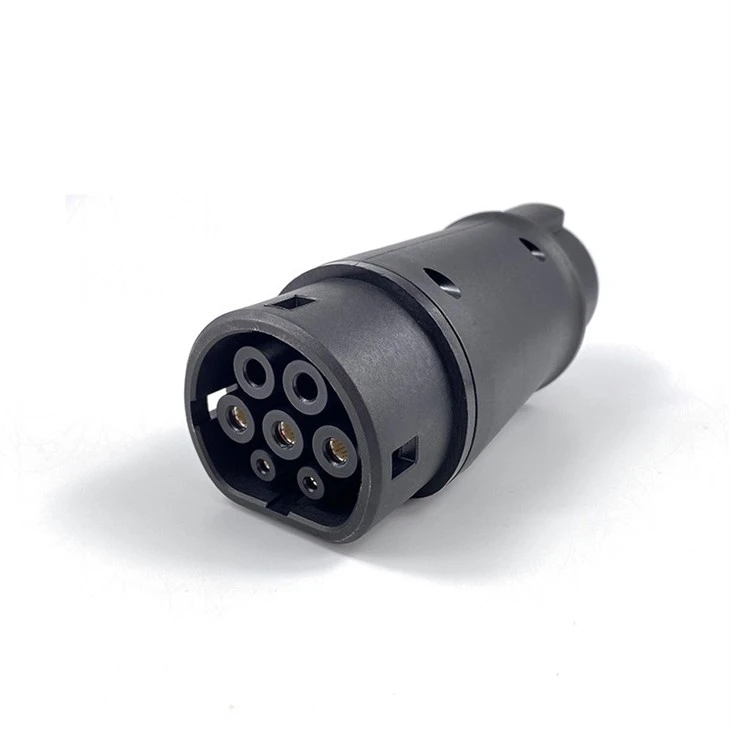
On the hardware side, the adapter has a set of pins and connectors that establish a physical connection with the charging station and the vehicle. These pins are responsible for transmitting power and data.
The power pins are pretty straightforward. They carry the electrical current from the charging station to the vehicle's battery. The voltage and amperage of the power are carefully regulated to ensure a safe and efficient charging process.
The data pins, on the other hand, are where the real magic happens. They are used to exchange information between the adapter, the charging station, and the vehicle. This information includes things like the charging status, the battery's state of charge, and any error messages.
For example, when you plug the adapter into the charging station and the vehicle, the data pins start communicating. The adapter sends a signal to the charging station to indicate that a vehicle is connected and ready to charge. The charging station then responds with information about the available power and any charging restrictions.
The adapter also communicates with the vehicle's onboard charging system. It sends information about the type of charging station (e.g., Level 1, Level 2, or DC fast charging) and the maximum power it can provide. The vehicle's charging system uses this information to adjust the charging process accordingly.
Software Communication
In addition to the hardware, software plays a crucial role in the communication between the adapter and the vehicle's charging system. The adapter has a built - in microcontroller that runs a firmware program. This firmware is responsible for managing the data exchange and ensuring that the charging process is safe and efficient.
The firmware uses a communication protocol to talk to the charging station and the vehicle. One of the most common protocols used in EV charging is the Controller Area Network (CAN) protocol. CAN is a robust and reliable communication protocol that is widely used in automotive applications.
The CAN protocol allows the adapter to send and receive messages in a structured way. Each message contains a specific piece of information, such as the charging current, the battery temperature, or the charging status. The adapter and the vehicle's charging system can then interpret these messages and take appropriate actions.
For instance, if the battery temperature gets too high during charging, the vehicle's charging system can send a message to the adapter via the CAN protocol. The adapter can then communicate with the charging station to reduce the charging current or stop the charging process altogether to prevent damage to the battery.
Another important aspect of the software communication is the authentication and security. To ensure that only authorized charging stations can charge the vehicle, the adapter and the vehicle use a process called authentication. This involves exchanging encryption keys and verifying each other's identities.
When you plug in the adapter, the vehicle and the charging station go through an authentication process. The adapter acts as an intermediary, facilitating the exchange of information between the two. If the authentication fails, the charging process will not start, protecting the vehicle from unauthorized charging and potential security threats.
Compatibility and Standards
One of the challenges in EV charging is ensuring compatibility between different adapters, charging stations, and vehicles. That's why there are a number of standards in place to govern the communication and charging process.
The most well - known standard is the SAE J1772 standard in North America and the IEC 62196 standard in Europe. These standards define the physical and electrical characteristics of the charging connectors, as well as the communication protocols and safety requirements.
As a supplier of EV Car Charger Adapter, we make sure that our adapters comply with these standards. This means that our adapters can work with a wide range of charging stations and vehicles, providing a seamless charging experience for our customers.
However, it's important to note that there are still some differences between different vehicle models and charging stations. Some vehicles may have additional features or requirements that are not covered by the standard protocols. In these cases, our team of engineers works closely with the vehicle manufacturers to develop custom solutions to ensure compatibility.
Real - World Applications
Let's take a look at some real - world scenarios to see how the communication between the adapter and the vehicle's charging system works in practice.
Imagine you're on a road trip and you need to charge your EV at a public charging station. You pull into the charging station and plug in our EV Charging Cable Adapter. The adapter immediately starts communicating with the charging station and your vehicle.
The adapter sends a signal to the charging station to identify the vehicle and request charging. The charging station checks its available power and sends back a message indicating the maximum charging rate. The adapter then relays this information to the vehicle's charging system.
The vehicle's charging system analyzes the information and decides whether to accept the charging rate. If everything is okay, it sends a confirmation message to the adapter. The adapter then communicates with the charging station to start the charging process.
During the charging process, the adapter continuously monitors the charging status and exchanges information with the vehicle and the charging station. If there are any issues, such as a power outage or a fault in the charging system, the adapter can quickly detect it and take appropriate actions, such as stopping the charging process and sending an error message to the vehicle.
Conclusion
In conclusion, the communication between an EV car adapter and the vehicle's charging system is a complex but well - orchestrated process. It involves a combination of hardware and software, using standardized communication protocols to ensure a safe and efficient charging experience.
As a supplier of EV car adapters, we are constantly working to improve the performance and compatibility of our products. We invest in research and development to stay ahead of the latest technologies and standards in the EV charging industry.
If you're in the market for an EV car adapter, we'd love to hear from you. Whether you're a fleet manager, an EV owner, or a business looking to install charging stations, we have the expertise and the products to meet your needs. Contact us today to start a conversation about your EV charging requirements and let's find the perfect adapter solution for you.

References
- SAE International. SAE J1772 Standard.
- International Electrotechnical Commission. IEC 62196 Standard.
- Automotive Engineering textbooks on CAN communication protocol.