

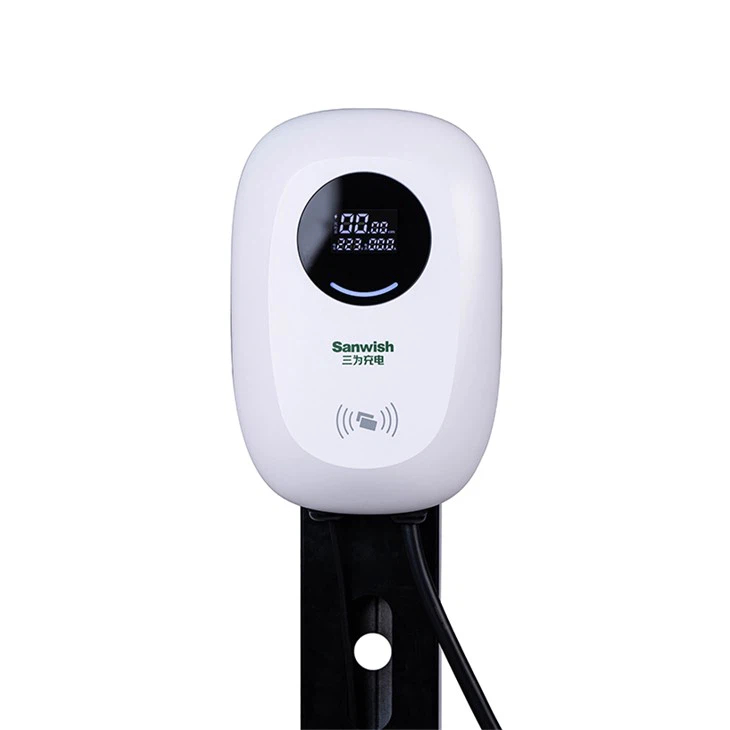
As a supplier of mini wallbox chargers, I've been deeply involved in understanding and optimizing the charging efficiency of these compact yet powerful devices. In this blog post, I'll delve into what charging efficiency means for a mini wallbox charger, the factors that influence it, and why it matters for both consumers and the broader electric vehicle (EV) ecosystem.

Understanding Charging Efficiency
Charging efficiency refers to the ratio of the electrical energy that is actually stored in the EV's battery to the total electrical energy drawn from the power grid. In other words, it measures how effectively the charger converts the incoming electricity into usable energy for the vehicle. A higher charging efficiency means less energy is wasted during the charging process, resulting in cost savings for the user and a reduced environmental impact.
For mini wallbox chargers, efficiency is typically expressed as a percentage. For example, if a charger has an efficiency of 90%, it means that 90% of the electricity drawn from the grid is stored in the battery, while the remaining 10% is lost as heat or through other inefficiencies.
Factors Affecting Charging Efficiency
Several factors can influence the charging efficiency of a mini wallbox charger. Understanding these factors can help users make informed decisions when choosing a charger and optimize its performance.
1. Charger Design and Technology
The design and technology used in the charger play a crucial role in determining its efficiency. Modern mini wallbox chargers are equipped with advanced power electronics and control systems that minimize energy losses. For instance, high - quality semiconductor components, such as IGBTs (Insulated - Gate Bipolar Transistors) or MOSFETs (Metal - Oxide - Semiconductor Field - Effect Transistors), can reduce resistive losses and improve overall efficiency.
Some chargers also feature intelligent charging algorithms that adjust the charging current and voltage based on the battery's state of charge and temperature. This not only improves efficiency but also extends the battery's lifespan. For more information on advanced charger technologies, you can check out our Wallbox Ocpp Enabled Charger.
2. Power Rating
The power rating of the charger is another important factor. Higher - power chargers can charge the vehicle faster, but they may not always be the most efficient option. In general, chargers operate at their highest efficiency when they are operating close to their rated power. If a high - power charger is used to charge a vehicle with a small battery or at a low charging rate, it may experience lower efficiency due to increased standby losses and other inefficiencies.
On the other hand, a lower - power mini wallbox charger may be more efficient for smaller EVs or when slow charging is sufficient. Our Ev Charging Station Wallbox comes in a range of power ratings to suit different user needs.
3. Battery Compatibility
The compatibility between the charger and the vehicle's battery is essential for optimal charging efficiency. Different EVs have different battery chemistries, voltage levels, and charging requirements. A charger that is not properly matched to the battery may result in inefficient charging, overheating, or even damage to the battery.
Most modern mini wallbox chargers are designed to be compatible with a wide range of EVs. However, it's still important to check the charger's specifications and ensure that it is suitable for your specific vehicle. Our Wallbox Electric Car Charger is designed with broad compatibility in mind to ensure efficient charging for various EV models.
4. Environmental Conditions
Environmental conditions, such as temperature and humidity, can also affect the charging efficiency of a mini wallbox charger. High temperatures can increase the internal resistance of the charger's components, leading to higher energy losses. Similarly, extreme cold can reduce the battery's ability to accept a charge efficiently.
To mitigate the impact of environmental conditions, some chargers are equipped with thermal management systems that regulate the temperature of the charger and the battery during charging. This helps to maintain optimal charging efficiency regardless of the external conditions.
Why Charging Efficiency Matters
Charging efficiency is not just a technical specification; it has significant implications for both consumers and the environment.
1. Cost Savings
For consumers, a more efficient charger means lower electricity bills. Since less energy is wasted during the charging process, users can save money in the long run. This is especially important as the cost of electricity continues to rise in many regions.
2. Reduced Environmental Impact
Efficient charging also contributes to a reduced environmental impact. By wasting less energy, we can reduce the demand for electricity generation, which often relies on fossil fuels. This helps to lower greenhouse gas emissions and promote a more sustainable energy future.
3. Faster Charging and Longer Battery Life
Higher charging efficiency can also lead to faster charging times. Since more of the energy drawn from the grid is actually stored in the battery, the vehicle can reach a full charge more quickly. Additionally, efficient charging can help to extend the battery's lifespan by reducing the stress on the battery cells.
Measuring and Improving Charging Efficiency
To measure the charging efficiency of a mini wallbox charger, users can use a power meter to measure the amount of electricity drawn from the grid and compare it to the amount of energy stored in the battery. Some advanced chargers also provide real - time efficiency data, which can be useful for monitoring and optimizing the charging process.
To improve charging efficiency, users can follow these tips:
- Choose a charger with a high - efficiency rating and advanced technology.
- Ensure that the charger is properly sized for the vehicle's battery and charging needs.
- Charge the vehicle in a well - ventilated area to prevent overheating.
- Keep the charger and the vehicle's battery clean and free of debris.
Conclusion
As a supplier of mini wallbox chargers, we understand the importance of charging efficiency. Our chargers are designed with the latest technology and features to ensure high - efficiency charging for a wide range of EVs. Whether you're looking for a fast - charging solution or a more energy - efficient option, we have the right charger for you.
If you're interested in learning more about our mini wallbox chargers or would like to discuss your specific charging needs, we invite you to contact us for a procurement discussion. We're committed to providing you with the best charging solutions and helping you make the most of your electric vehicle.
References
- Electric Vehicle Charging Infrastructure Handbook, U.S. Department of Energy
- International Electrotechnical Commission (IEC) standards for EV chargers
- Industry reports on EV charger efficiency and performance