

As an AC EV charger supplier deeply involved in the electric vehicle (EV) charging industry, I often get asked about the environmental friendliness of AC and DC chargers. This topic is not only crucial for consumers who are conscious about their carbon footprint but also for businesses aiming to make sustainable choices. In this blog, I'll explore whether AC EV chargers are more environmentally friendly than DC chargers, backed by scientific facts and industry insights.
How AC and DC Chargers Work
To understand the environmental impact, we first need to grasp how these chargers function. Electric vehicles have a battery that stores electrical energy. AC chargers supply alternating current (AC) to the vehicle. Once the AC power reaches the car, it's converted into direct current (DC) by the onboard charger. On the other hand, DC chargers directly provide direct current to the vehicle's battery, bypassing the onboard charger.
Energy Efficiency
One of the key factors in determining environmental friendliness is energy efficiency. AC chargers, although slower in charging speed, tend to have higher efficiency when it comes to power conversion. The conversion from AC to DC in the onboard charger of the vehicle is generally well - optimized. In contrast, DC chargers involve multiple conversion steps. They take AC power from the grid, convert it to DC at the charging station, and then transfer it to the vehicle's battery. Each conversion step results in some energy loss in the form of heat.

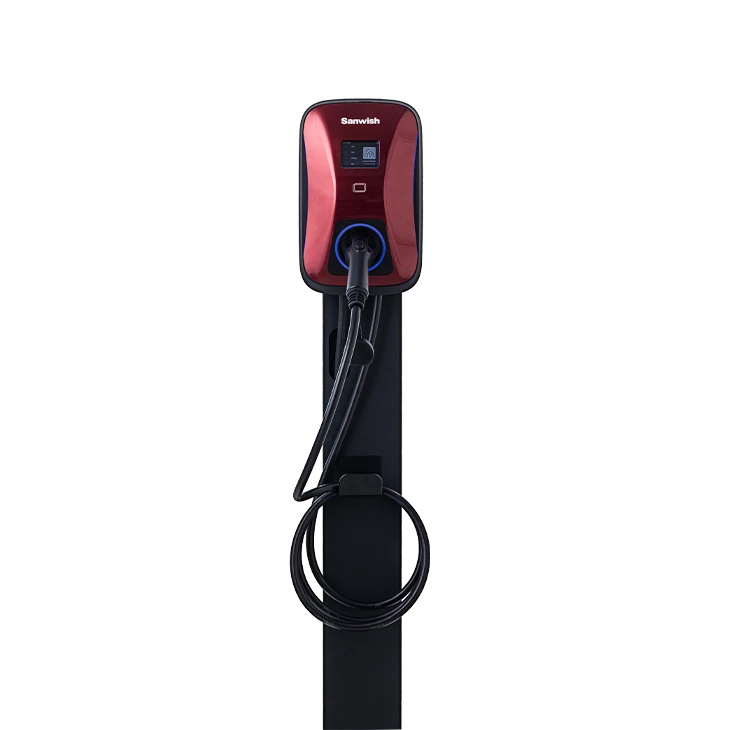
A study by the National Renewable Energy Laboratory (NREL) found that the efficiency of an AC charging system can be as high as 90 - 95%. Meanwhile, DC chargers typically have an efficiency range of 80 - 90%. This means that for the same amount of electrical energy drawn from the grid, an AC charger can transfer more usable energy to the vehicle's battery. From an environmental perspective, higher efficiency means less wasted energy, which in turn reduces the overall demand for electricity generation. And since a significant portion of the world's electricity is still generated from fossil fuels, reducing electricity demand helps in cutting down greenhouse gas emissions.
Grid Impact
Another aspect to consider is the impact on the electrical grid. DC chargers are known for their high - power demand. Fast - charging DC stations can draw hundreds of kilowatts of power, which can put a strain on the local grid. This high - demand can lead to issues such as voltage drops and increased wear and tear on grid infrastructure. To accommodate DC chargers, grid operators may need to invest in upgrading transformers, cables, and other grid components. These infrastructure upgrades often require the extraction of raw materials, manufacturing processes, and installation, all of which have their own environmental footprints.
AC chargers, on the other hand, operate at lower power levels. A typical AC EV Charging Station may have a power output ranging from 3.7 kW to 22 kW. This lower power demand is much easier for the grid to handle. It reduces the need for extensive grid upgrades, thereby minimizing the environmental impact associated with grid infrastructure development. For example, a residential area with multiple EVs can easily support AC chargers without overloading the local grid, while installing DC chargers would likely require significant grid enhancements.
Manufacturing and Lifecycle Analysis
The manufacturing process of chargers also plays a role in their environmental friendliness. DC chargers are more complex in design and require more advanced components such as high - power inverters and sophisticated control systems. The production of these components involves the extraction of rare earth metals and other valuable resources, which often have a high environmental cost due to mining operations.
AC chargers, especially 22kW AC EV Charger models, are relatively simpler in design. They have fewer components and require less raw material input. Additionally, the manufacturing process of AC chargers generally consumes less energy compared to DC chargers. When we consider the entire lifecycle of the chargers, including manufacturing, use, and disposal, AC chargers have a lower carbon footprint.
During the disposal phase, DC chargers can be more challenging to recycle due to their complex components. The rare earth metals and other specialized materials in DC chargers may require advanced recycling techniques, which are not always widely available. AC chargers, with their simpler design, are easier to disassemble and recycle, further reducing their environmental impact at the end of their life.
Charging Behavior and Usage Patterns
The charging behavior of EV owners also affects the environmental performance of chargers. AC chargers are typically used for overnight or slow - charging at home or in workplaces. This type of charging aligns well with the natural rhythm of electricity generation. Many regions have a surplus of electricity during off - peak hours, which is often generated from renewable sources such as wind and solar. By using AC chargers for slow - charging during these off - peak hours, EV owners can make better use of renewable energy, reducing their reliance on fossil - fuel - based electricity.
DC chargers are mainly used for fast - charging on long - distance trips or when a quick top - up is needed. However, the high - power demand of DC chargers often means that they are more likely to draw power from the grid during peak hours when the electricity mix may be less green. In some cases, grid operators may need to fire up peaker plants, which are usually less efficient and more polluting, to meet the sudden high demand from DC chargers.
Conclusion
In conclusion, based on energy efficiency, grid impact, manufacturing, and charging behavior, AC EV chargers are generally more environmentally friendly than DC chargers. They offer higher energy conversion efficiency, have a lower impact on the grid, are easier to manufacture and recycle, and can better utilize renewable energy sources.
As an AC EV charger supplier, I am committed to providing high - quality, environmentally friendly charging solutions. Our Ac Fast Charger For Ev models are designed to meet the needs of EV owners while minimizing the environmental impact. If you are interested in our products or have any questions about AC EV chargers, I encourage you to contact us for a detailed discussion. Whether you are a residential customer looking to install a home charger or a business owner planning a public charging station, we can offer customized solutions to suit your requirements. Let's work together to create a more sustainable future for transportation.
References
- National Renewable Energy Laboratory (NREL). "Efficiency Analysis of Electric Vehicle Charging Systems."
- International Energy Agency (IEA). "Technology Roadmap: Electric Vehicles."
- Journal of Power Sources. "Lifecycle Assessment of Electric Vehicle Charging Technologies."