

Can I use an AC home charger to charge a portable projector?
As a supplier of AC home chargers, I often encounter various questions from customers regarding the compatibility of our chargers with different devices. One question that has popped up recently is whether an AC home charger can be used to charge a portable projector. In this blog post, I'll delve into this topic, exploring the technical aspects, potential risks, and practical considerations.
Understanding the Basics of AC Home Chargers and Portable Projectors
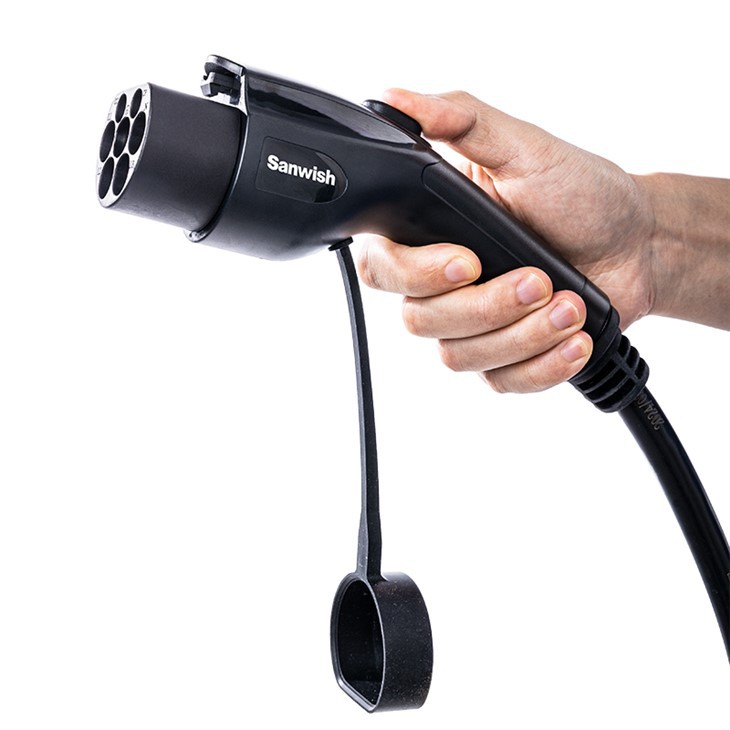
First, let's understand what an AC home charger is. An AC home charger is designed to convert the alternating current (AC) from your home's electrical outlet into a direct current (DC) that can be used to charge electronic devices. These chargers come in various power ratings, typically ranging from a few watts to several kilowatts. For instance, our company offers a range of chargers, including the AC EV Charging Station, 22kW AC EV Charger, and Ac Level 2 Charging Station, which are mainly used for electric vehicles but share the basic principle of AC - DC conversion.
On the other hand, a portable projector is a device that projects images or videos onto a screen or wall. It usually has a built - in battery that needs to be charged periodically. The power requirements of portable projectors vary depending on their size, brightness, and features. Smaller, less powerful projectors may require as little as 10 - 20 watts, while larger, high - end models can consume up to 100 watts or more.
Compatibility Factors
Voltage and Current Ratings
The most crucial factor in determining whether an AC home charger can be used to charge a portable projector is the compatibility of voltage and current ratings. Every electronic device has specific voltage and current requirements for charging. For example, a portable projector might require a 12V DC input with a maximum current of 2A. If the output voltage of the AC home charger is significantly higher or lower than the projector's required voltage, it can cause serious damage to the projector's battery or internal circuitry. Similarly, if the charger provides too much or too little current, it can lead to inefficient charging, overheating, or even battery failure.
Connector Types
Another important consideration is the connector type. AC home chargers come with a variety of connectors, such as USB - A, USB - C, barrel connectors, etc. Portable projectors also have their own specific charging connectors. You need to ensure that the charger's connector can fit into the projector's charging port. If the connectors are not compatible, you may need to use an adapter, but this can introduce additional risks, such as voltage drops or short circuits.
Potential Risks of Using an Incompatible Charger
Overheating
Using an AC home charger with a higher power output than the projector's requirements can cause the projector to overheat. Overheating can damage the internal components of the projector, reduce the lifespan of the battery, and even pose a fire hazard. For example, if a charger provides 24V to a projector that only requires 12V, the excess voltage will be dissipated as heat, leading to overheating.
Battery Damage
Incorrect voltage or current can also damage the projector's battery. Overcharging, which can occur if the charger provides too much current, can cause the battery to swell, leak, or even explode in extreme cases. Undercharging, on the other hand, can lead to reduced battery capacity over time, resulting in shorter battery life and poor performance.
When It Might Be Possible
There are some scenarios where using an AC home charger to charge a portable projector might be possible. If you have a charger with adjustable voltage and current settings, you can potentially set it to match the projector's requirements. Additionally, if the charger has an output voltage and current that closely match the projector's specifications and the connector is compatible, it may work safely. However, it's always recommended to use the charger that comes with the projector or a charger specifically recommended by the manufacturer.
Practical Considerations
Charging Time
Even if the charger is compatible, the charging time may vary. AC home chargers may have different charging speeds compared to the projector's original charger. A charger with a lower power output will take longer to charge the projector's battery. For example, if the original charger can fully charge the projector in 2 hours, a lower - power AC home charger might take 4 - 5 hours.
Safety Certifications
When considering using an AC home charger for a portable projector, make sure the charger has the necessary safety certifications. These certifications ensure that the charger meets certain safety standards and reduces the risk of electrical hazards. Our company's chargers, including the ones mentioned earlier, are rigorously tested and certified to meet international safety standards.
Conclusion
In conclusion, while it is technically possible to use an AC home charger to charge a portable projector in some cases, it is a decision that should be made with caution. You need to carefully consider the voltage, current, and connector compatibility, as well as the potential risks involved. If you are unsure, it is always best to consult the projector's manufacturer or a professional.
As a supplier of high - quality AC home chargers, we are committed to providing our customers with safe and reliable charging solutions. If you have any questions about our products or need help in finding the right charger for your device, please feel free to contact us for a procurement discussion. We are here to assist you in making the best choice for your charging needs.

References
- Electronic Device Charging Standards and Guidelines. IEEE.
- Battery Safety and Charging Best Practices. International Electrotechnical Commission (IEC).