

Hey there, fellow EV enthusiasts! As a supplier of DC chargers for home, I've had my fair share of chats with folks curious about how the charging speed of our home DC chargers stacks up against other charging options out there. So, I thought I'd break it down in this blog post.
Let's start by getting a basic understanding of what DC charging is. DC, or direct current, chargers provide power directly to the EV's battery. Unlike AC (alternating current) chargers, which require the vehicle's on - board charger to convert the AC power to DC before it can be stored in the battery, DC chargers skip that step. This is a game - changer when it comes to charging speed.

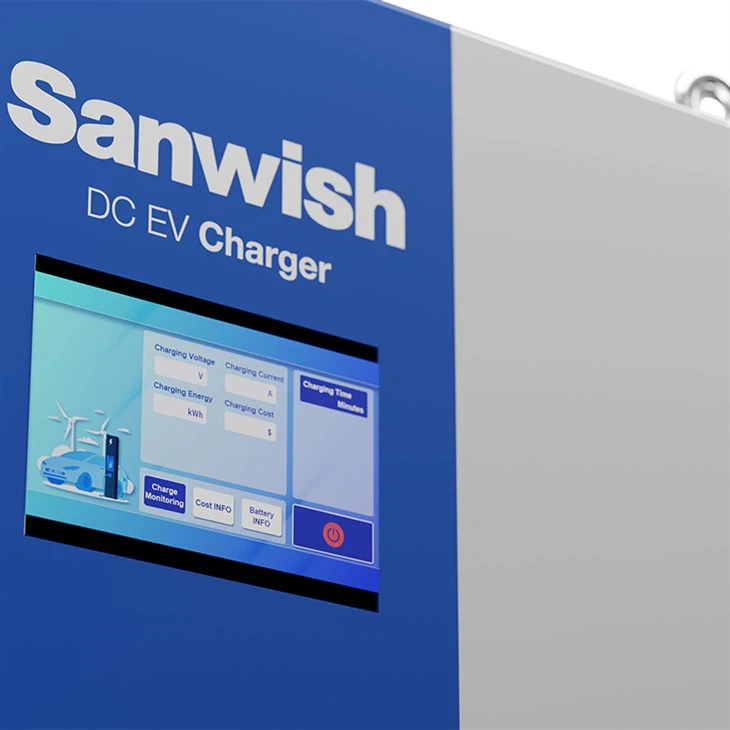
DC Chargers for Home vs. Standard AC Wall Chargers
If you're using a standard AC wall charger at home, you're probably familiar with the slow and steady charging process. These chargers typically have a power output ranging from 3 - 7 kW. For example, if you've got an EV with a 60 kWh battery, using a 3 kW AC charger, it would take around 20 hours to fully charge the battery (60 kWh / 3 kW = 20 hours). That's a long time to wait, especially if you're in a hurry to get back on the road.
On the other hand, our DC Charger Home can offer much higher power outputs. Even a relatively low - end home DC charger can have a power output of 20 - 30 kW. Using a 30 kW DC charger to charge the same 60 kWh battery, it would only take about 2 hours (60 kWh / 30 kW = 2 hours). That's a massive difference! You can basically wake up in the morning, plug in your car, and have it fully charged by the time you're done with breakfast.
DC Chargers for Home vs. Public DC Fast Chargers
Now, let's talk about public DC fast chargers. These are the ones you usually find at highway rest stops or dedicated charging stations. Public DC fast chargers can have extremely high power outputs, often ranging from 50 kW to over 350 kW. They're designed to get you back on the road as quickly as possible during long - distance trips.
Our home DC chargers, while not as powerful as the high - end public DC fast chargers, still offer a great balance between speed and convenience. For daily use, you don't always need to charge your car from 0 to 100% in 15 - 20 minutes like you would at a public fast - charging station. Most of the time, you just need to top up your battery overnight or during the day while you're at home.
Let's say you've driven 100 miles and used up 20 kWh of your battery's capacity. Using a 50 kW public DC fast charger, it would take about 24 minutes to replenish that 20 kWh (20 kWh / 50 kW = 0.4 hours or 24 minutes). With a 30 kW home DC charger, it would take around 40 minutes (20 kWh / 30 kW = 0.67 hours or about 40 minutes). While it's a bit longer, you can do other things at home while your car is charging, like relaxing on the couch or doing some household chores.
Factors Affecting Charging Speed
It's important to note that the actual charging speed can be affected by several factors. One of the biggest factors is the battery's state of charge. Most EV batteries charge at a slower rate as they approach full capacity. This is a safety measure to prevent over - charging and damage to the battery. So, even if you have a high - power DC charger, the charging speed will gradually decrease as the battery gets closer to 100%.
Another factor is the temperature. Batteries work best within a certain temperature range. If it's too cold or too hot outside, the charging speed may be reduced. Some modern EVs have battery thermal management systems to help maintain the optimal temperature, but extreme temperatures can still have an impact.
The vehicle's battery management system also plays a role. Each EV manufacturer has its own algorithms and limits for charging speed. Some cars may be able to accept a higher charging rate than others, even when using the same charger.
Why Choose Our Home DC Chargers
As a supplier, I'm really proud of the Best DC Fast Charger we offer for home use. Our chargers are designed with the latest technology to ensure efficient and safe charging. They're also compact and easy to install, so you don't need to worry about a complicated setup process.
We understand that every EV owner has different needs. Whether you're a daily commuter who needs a quick top - up or someone who takes longer trips on the weekends, our DC Electric Charger can provide a reliable charging solution. And with the increasing popularity of EVs, having a fast - charging option at home is becoming more and more essential.
Conclusion
In conclusion, the charging speed of our home DC chargers is significantly faster than standard AC wall chargers and offers a great alternative to public DC fast chargers for daily use. While they may not be as powerful as the high - end public chargers, they provide a convenient and practical solution for keeping your EV charged at home.
If you're interested in learning more about our home DC chargers or are thinking about making a purchase, I'd love to have a chat with you. Just reach out, and we can discuss your specific needs and how our chargers can fit into your lifestyle. Let's make your EV charging experience as smooth and efficient as possible!
References
- "Electric Vehicle Charging: A Comprehensive Guide." Published by a leading automotive research firm.
- Manufacturer's specifications for various EV models and chargers.